Jiayuguan
A day in the desert along the Silk Road
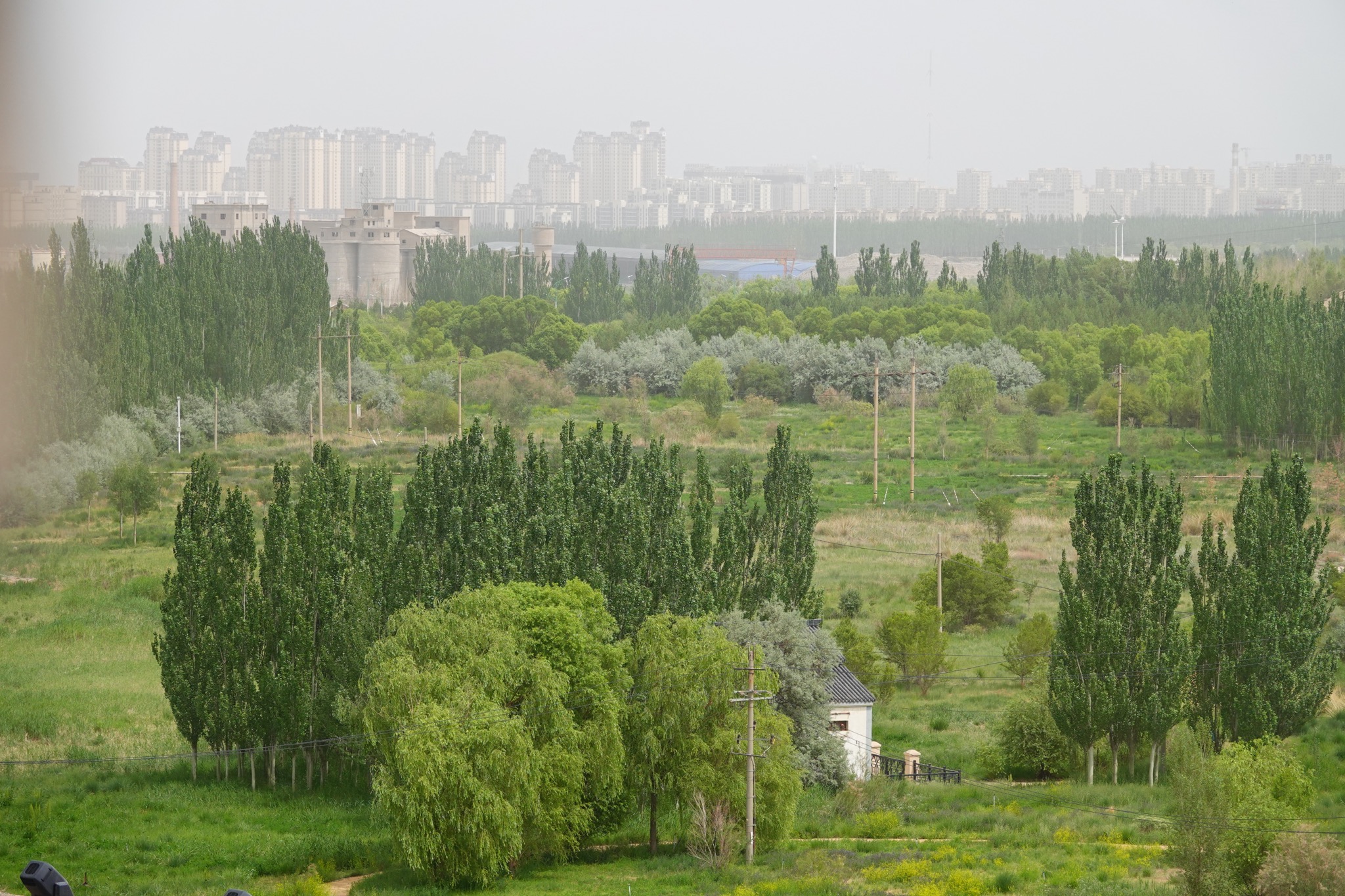
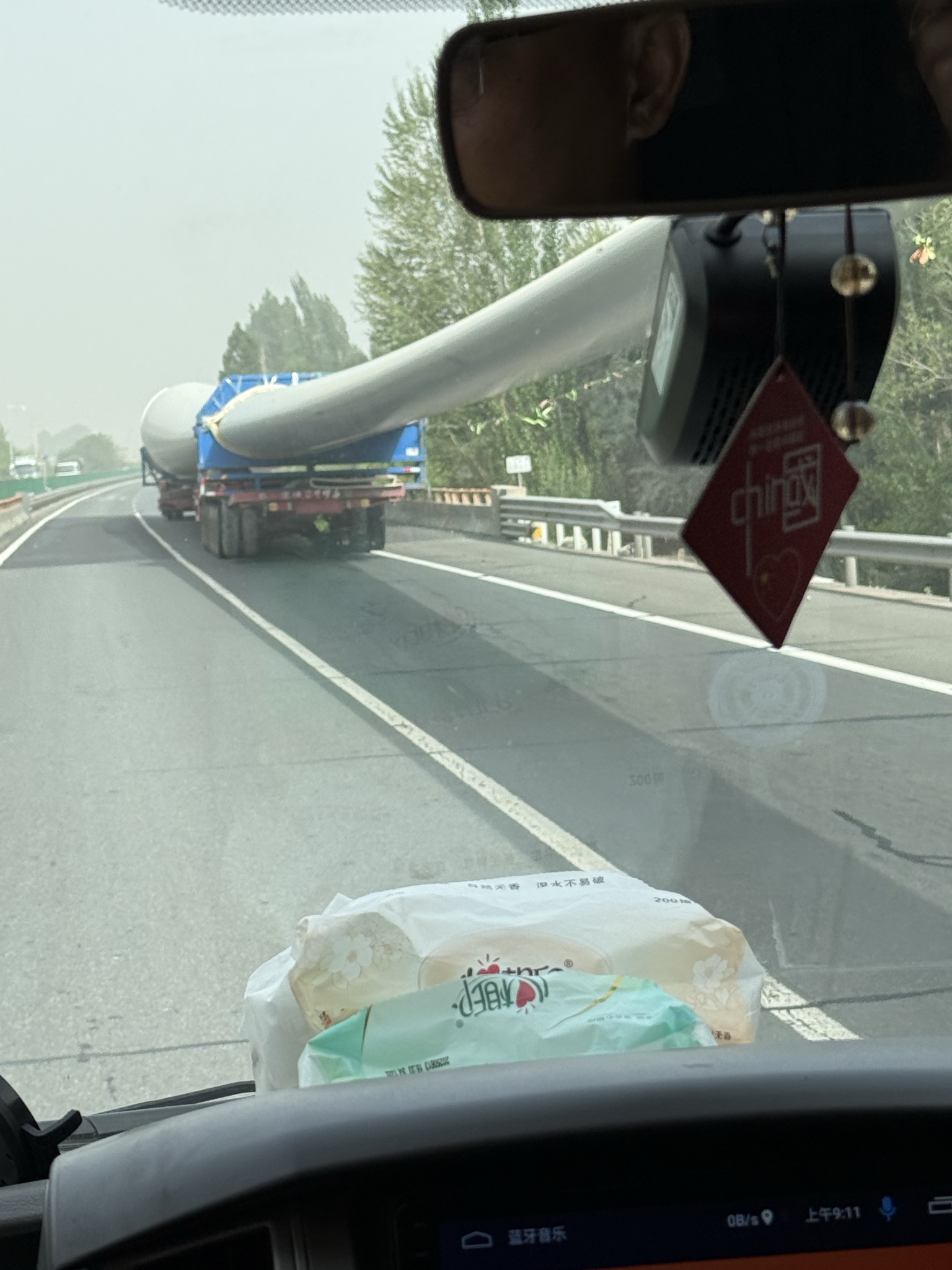
After a nice breakfast we headed out on the good quality freeway but into an unseasonal Mongolian sandstorm presenting as a dull unending cloud.
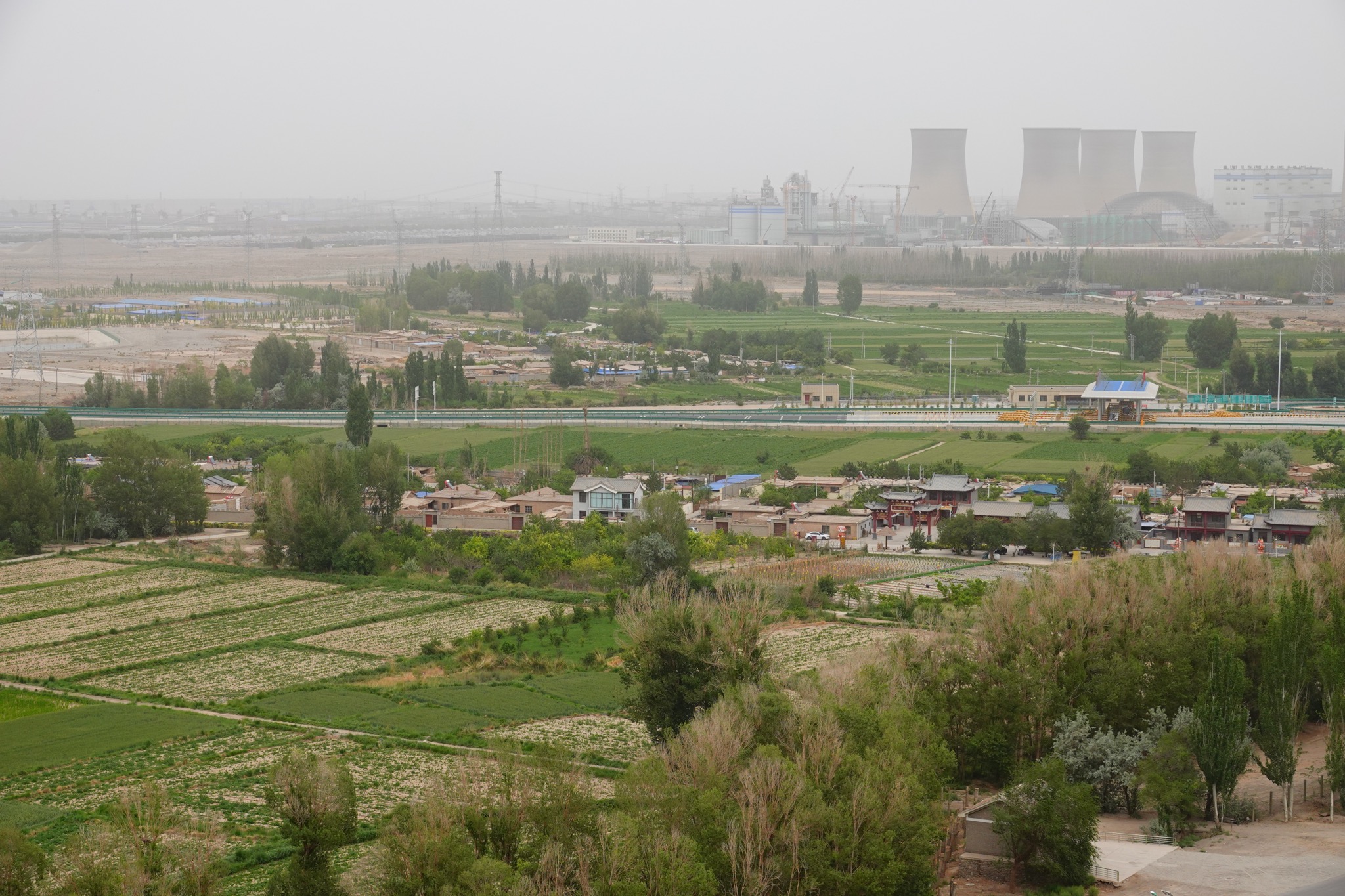
However my day was enlivened by passing not one but three wind turbine blades being carried in convoy. In Australia in say QLD you can move one a week and it requires a police escort. Here on a good quality two lane each way freeway they were treated as normal traffic. In fact this part of China has lots of solar and wind farm but also lots of coal fired power stations one of which features in the photos.
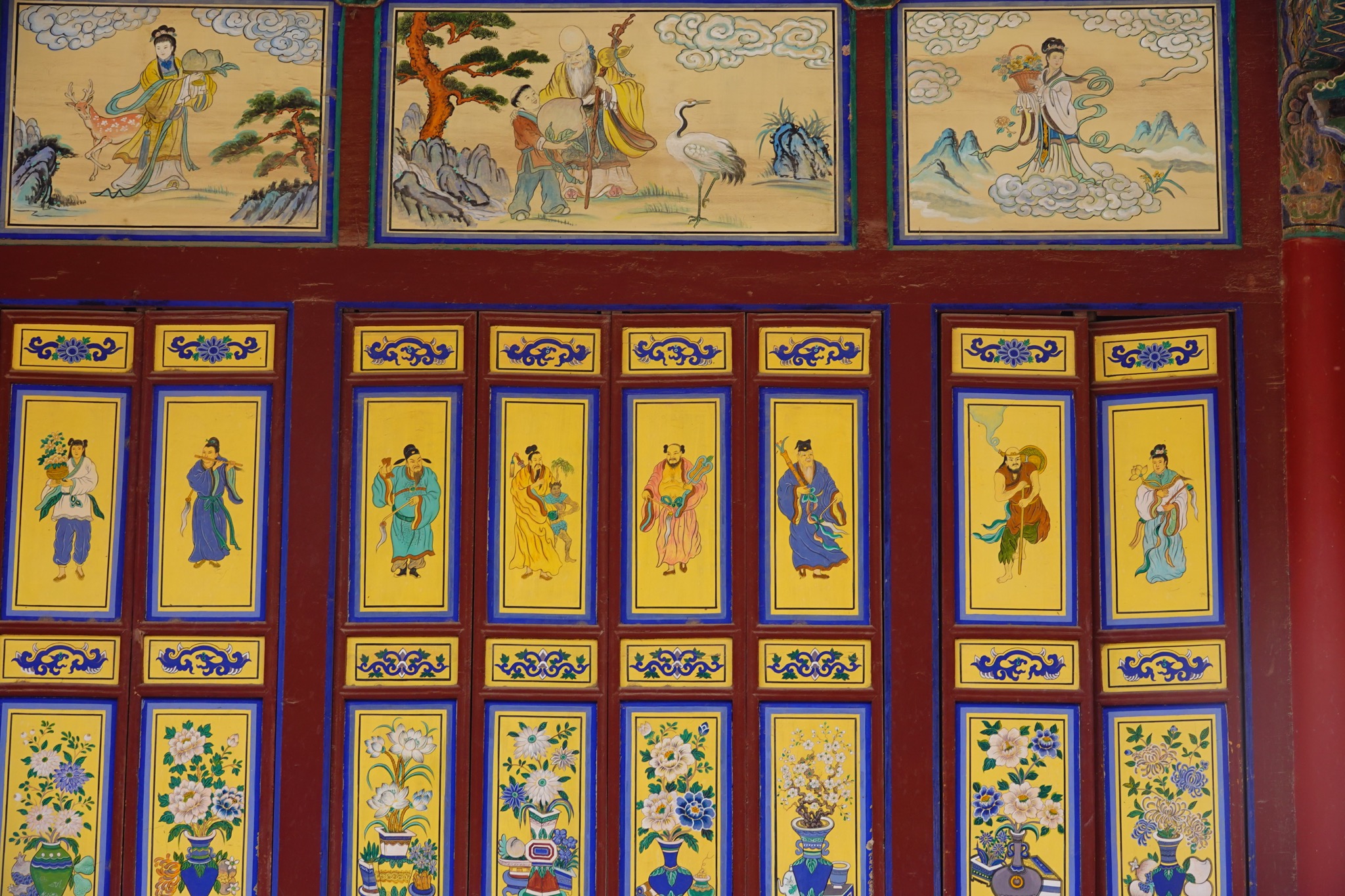
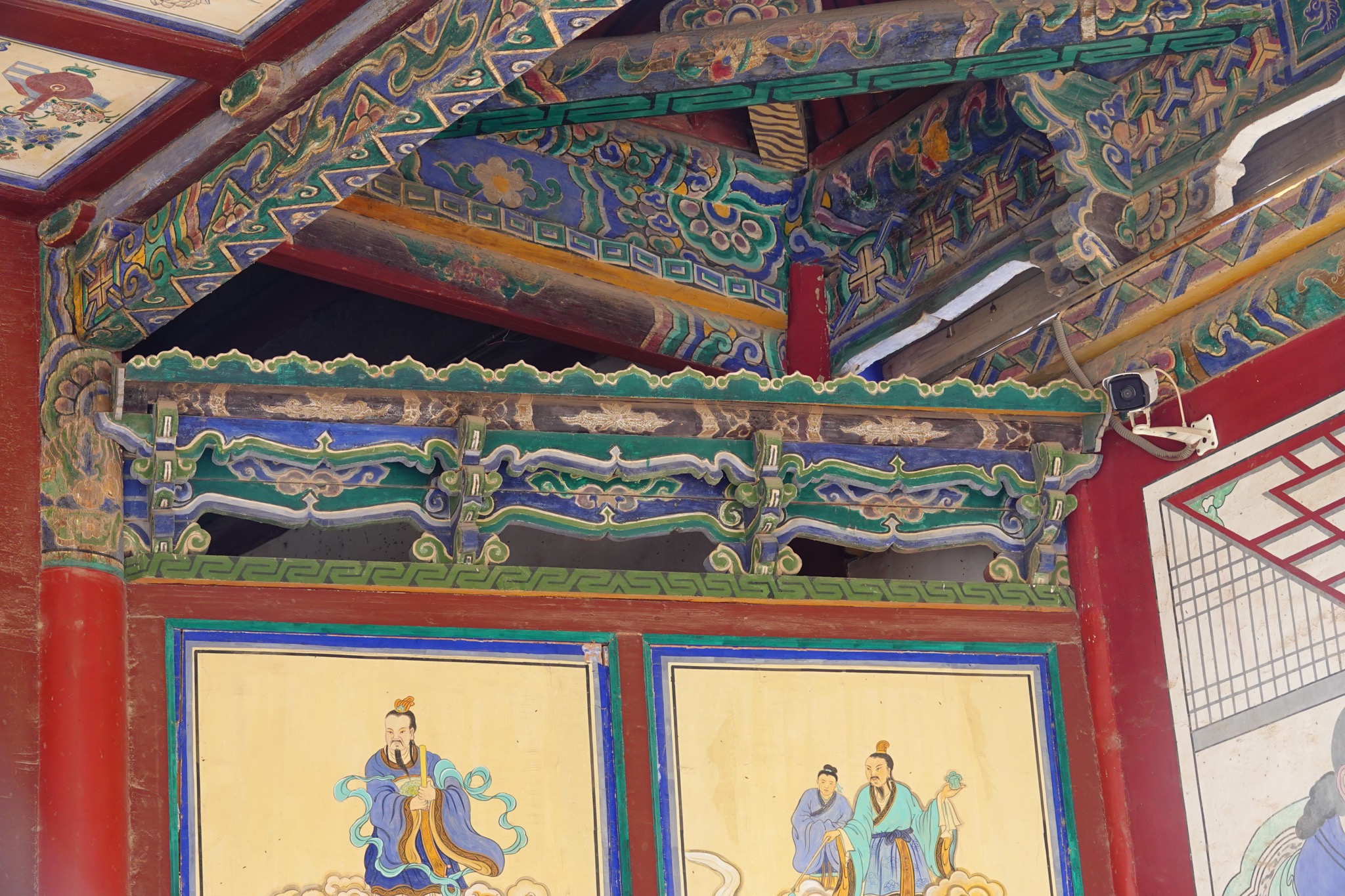
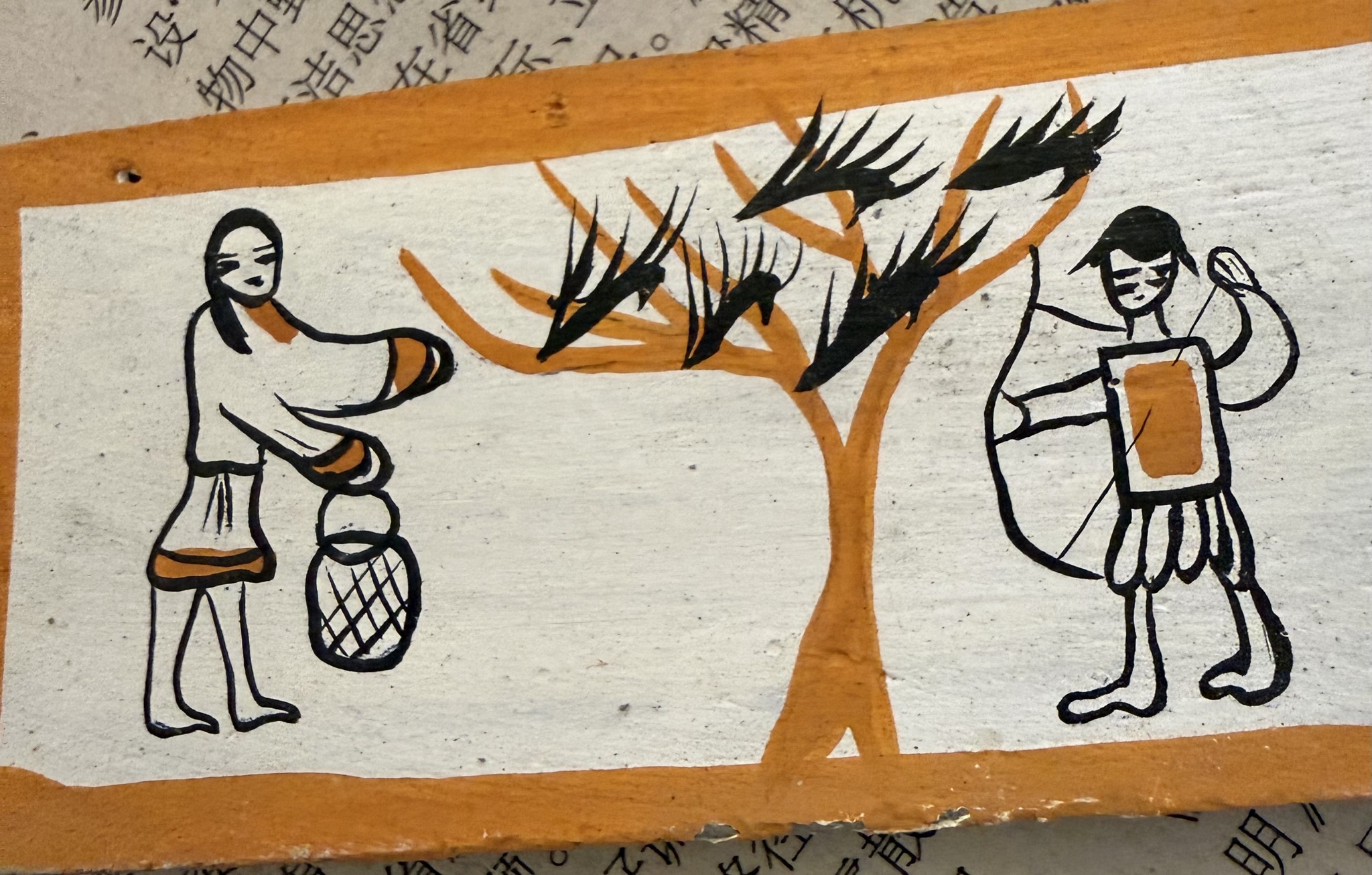
The cultural sites visited were the wei-ji tomb(s) which I found quite powerful. If I compared them with Europe the painting seems a little primitive for 4th century AD compared to say Roman or Greek Art but nevertheless less well executed. The tombs themselves were metres underground, no photography allowed and built without mortar.
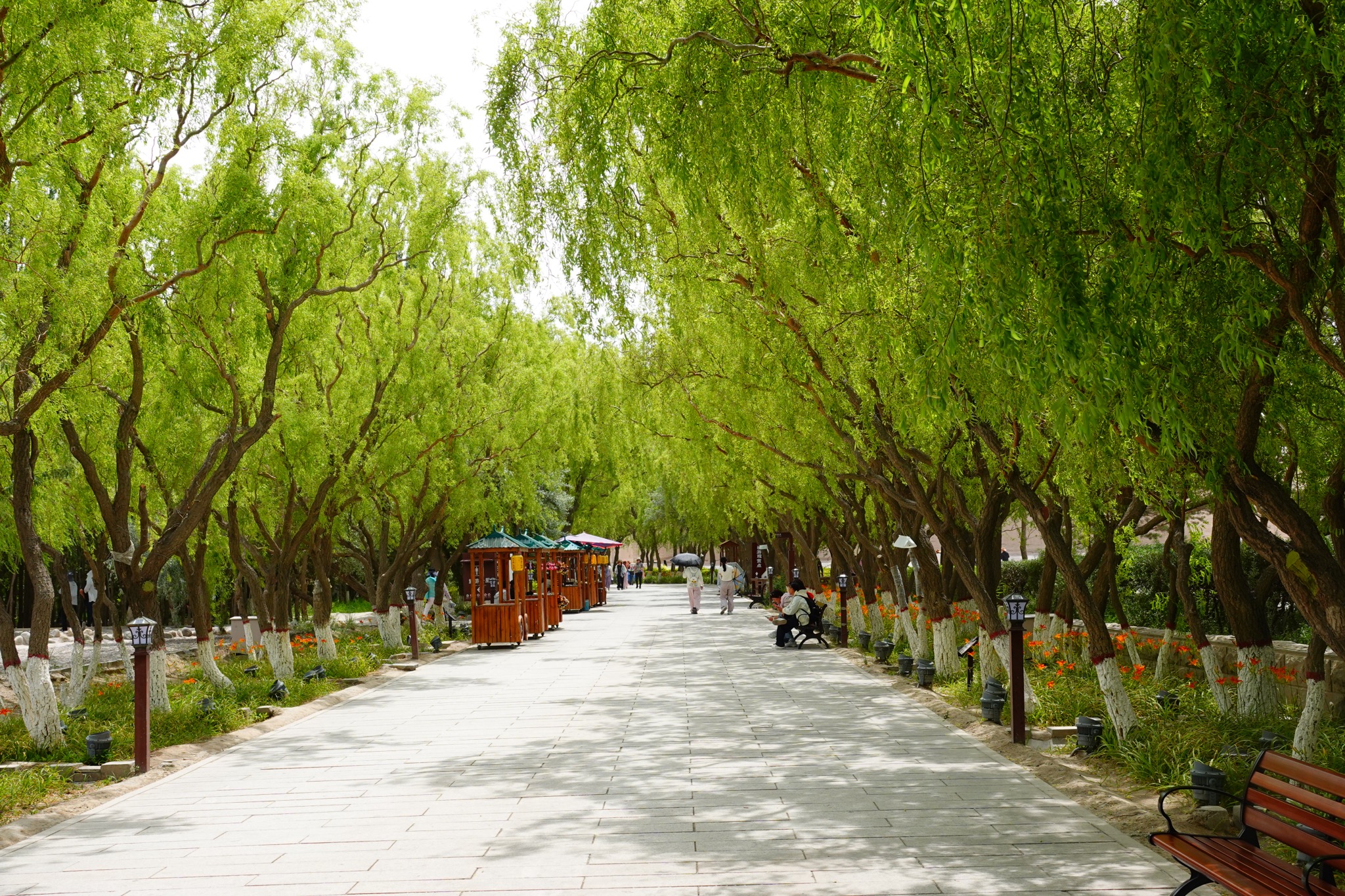
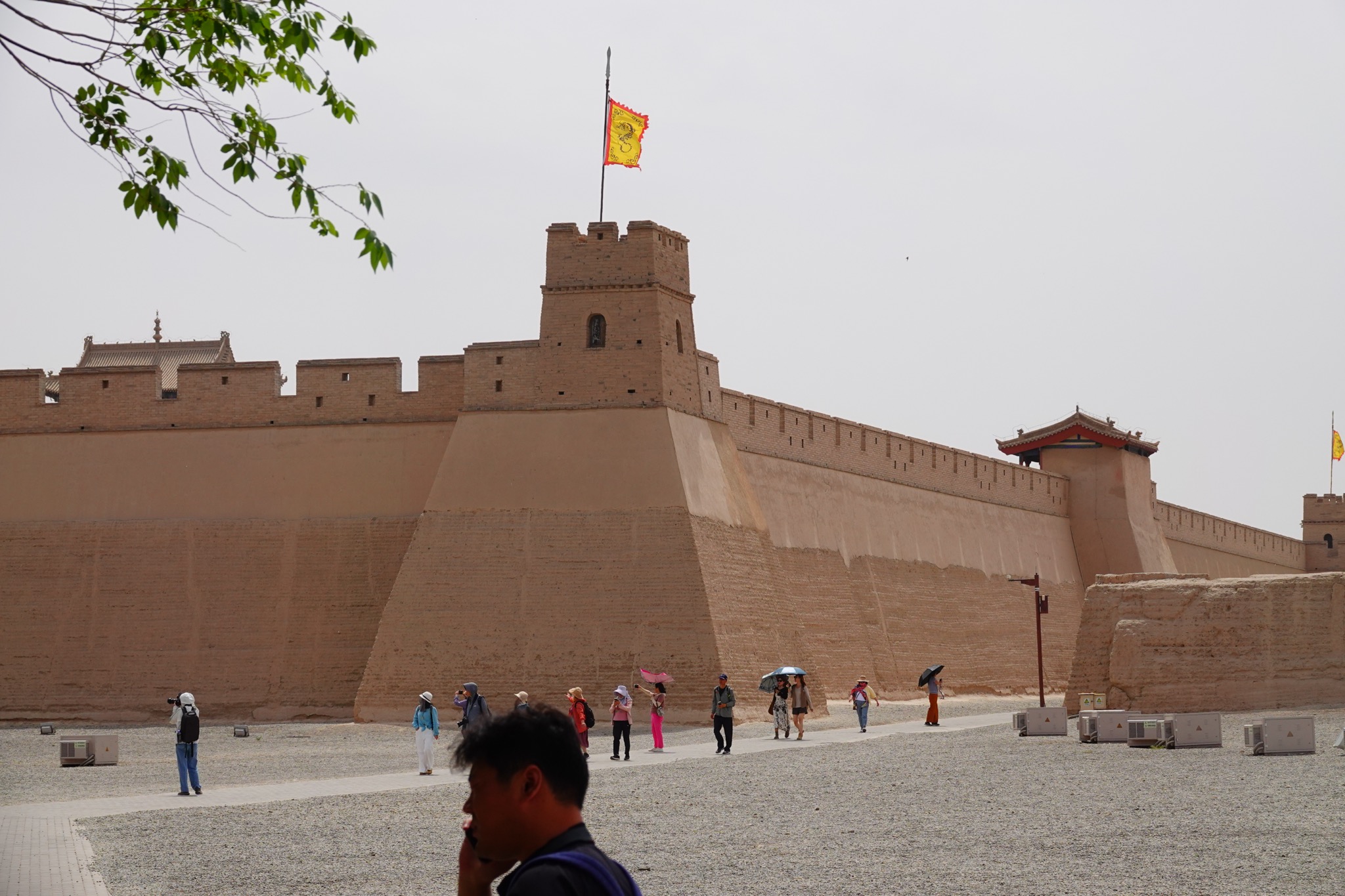
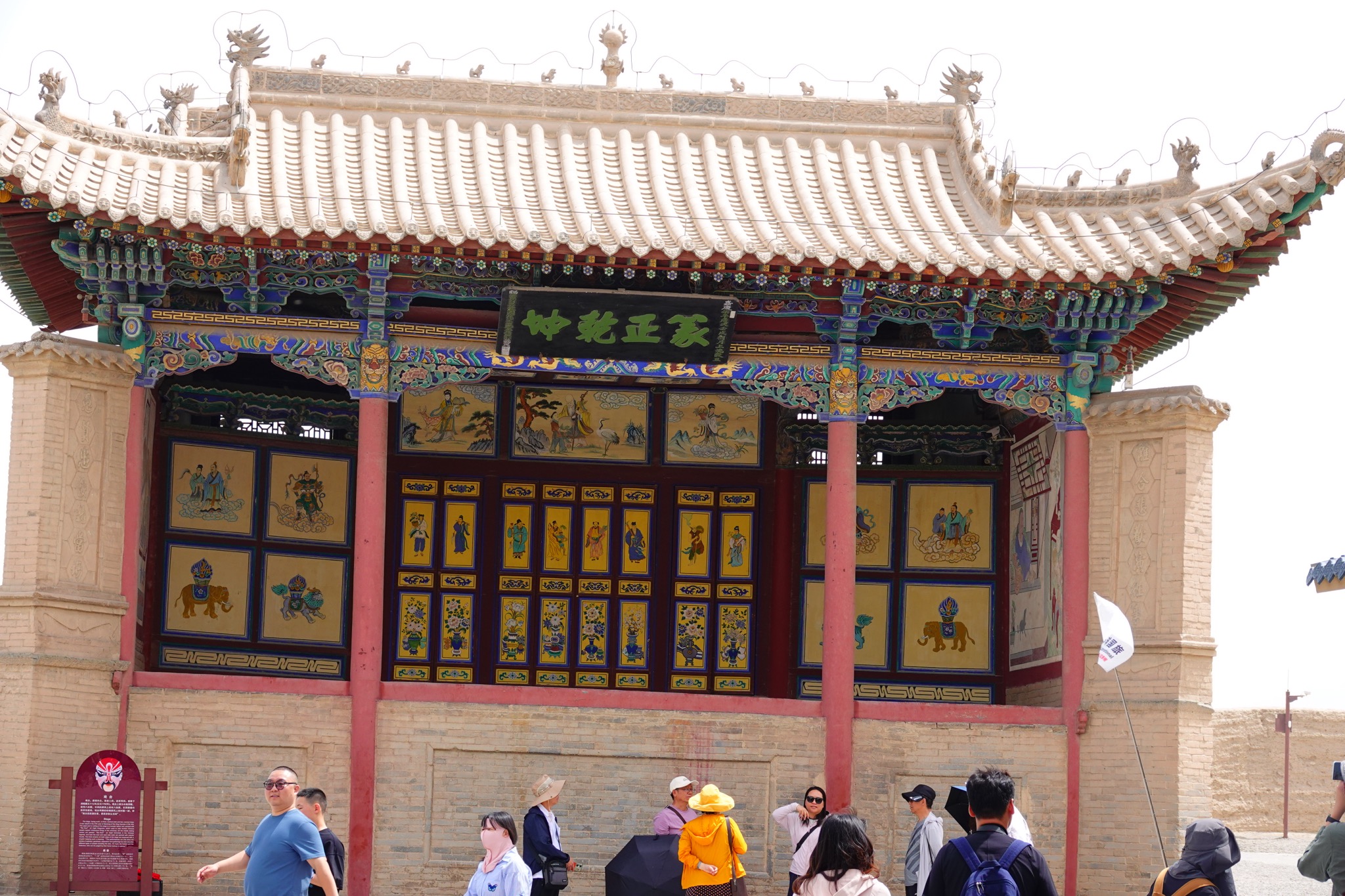
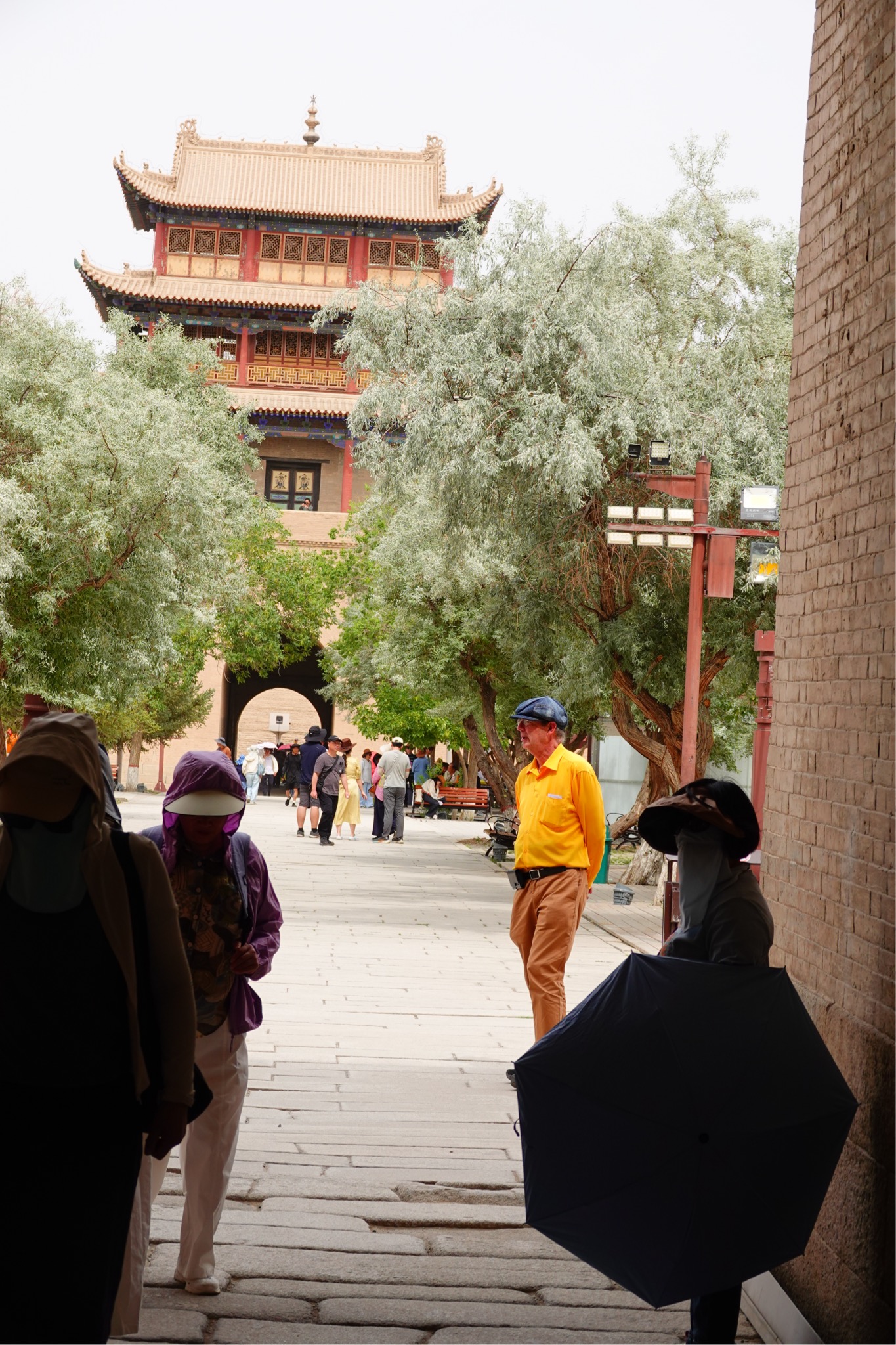
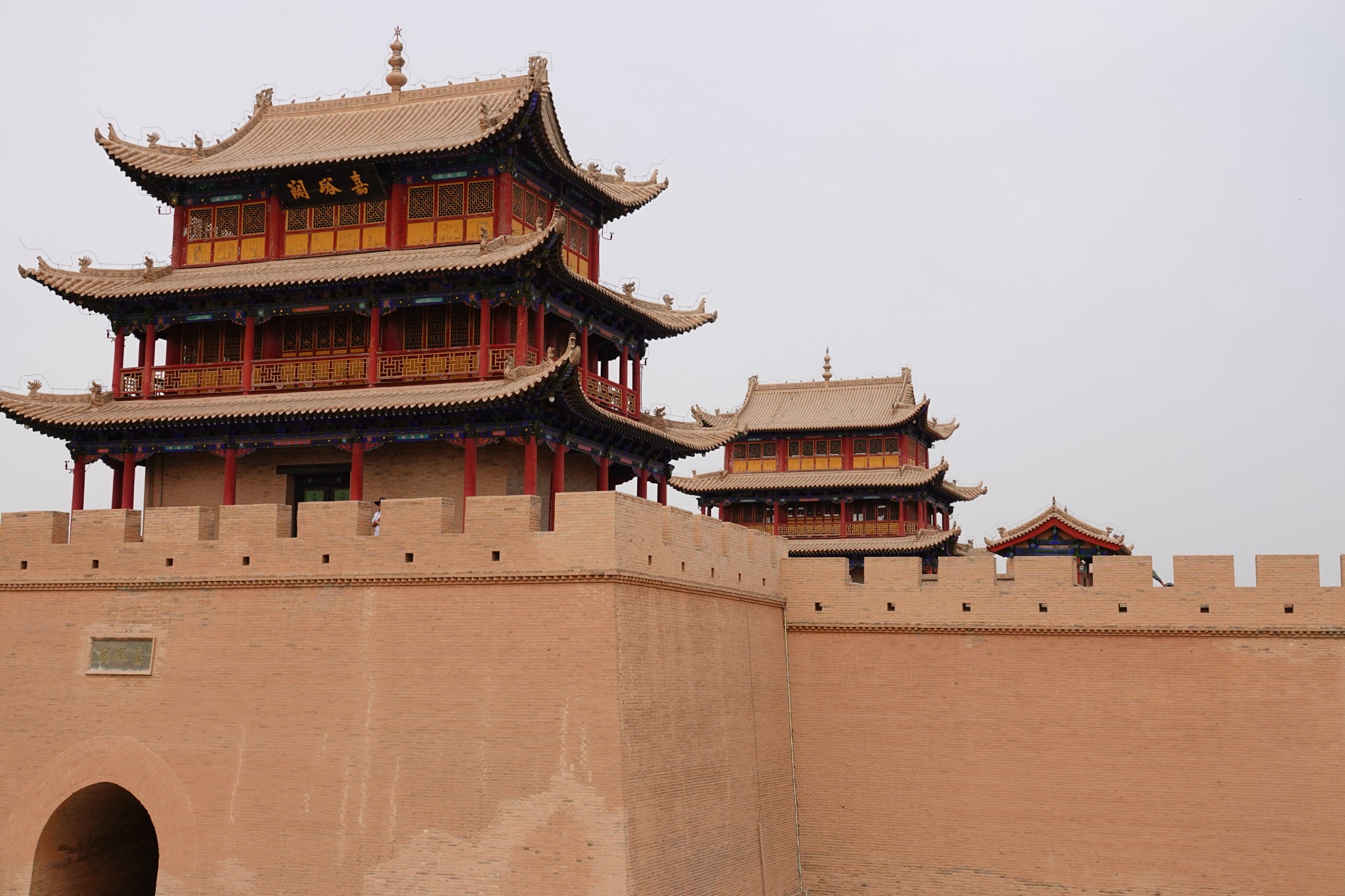
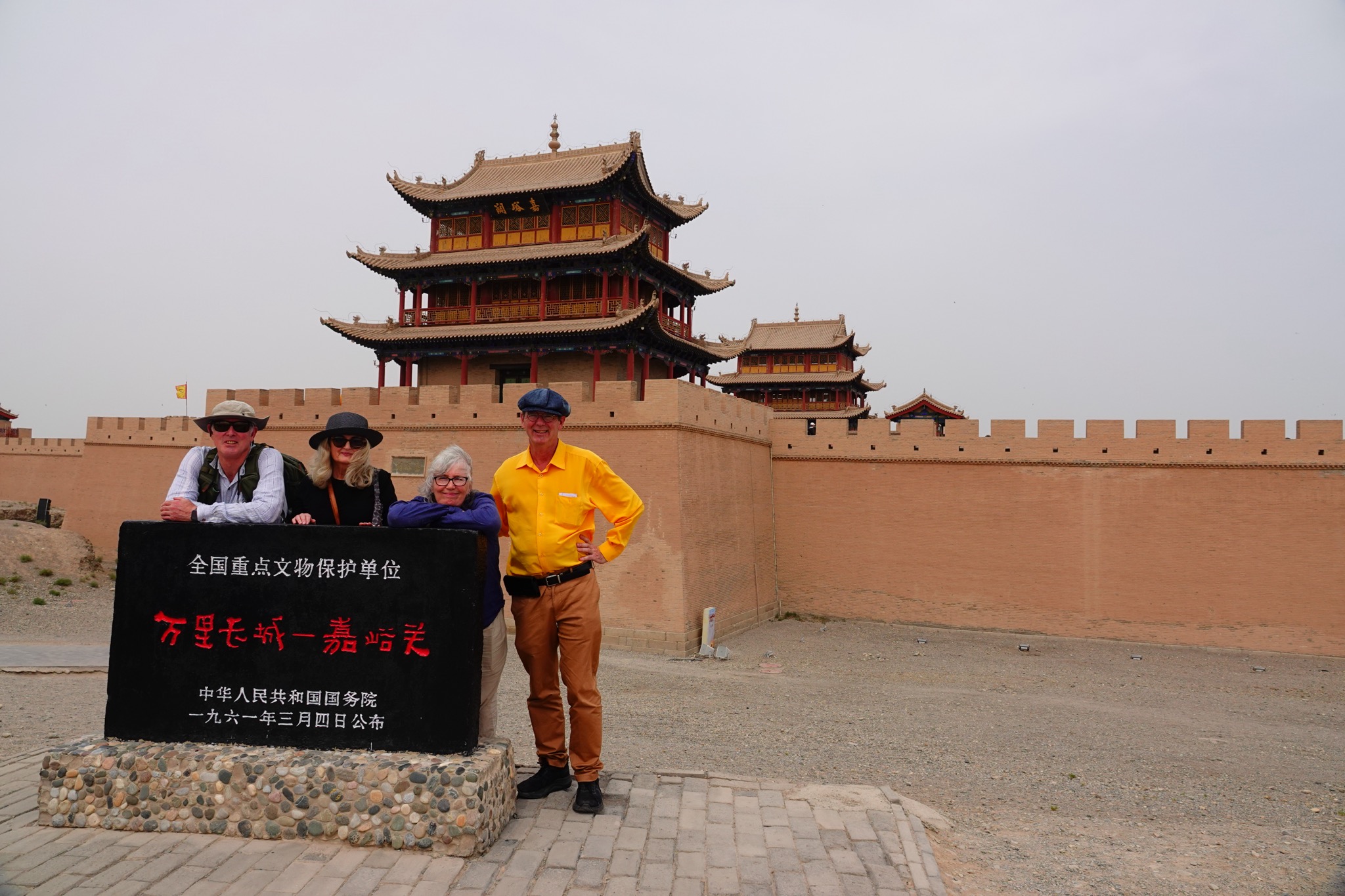
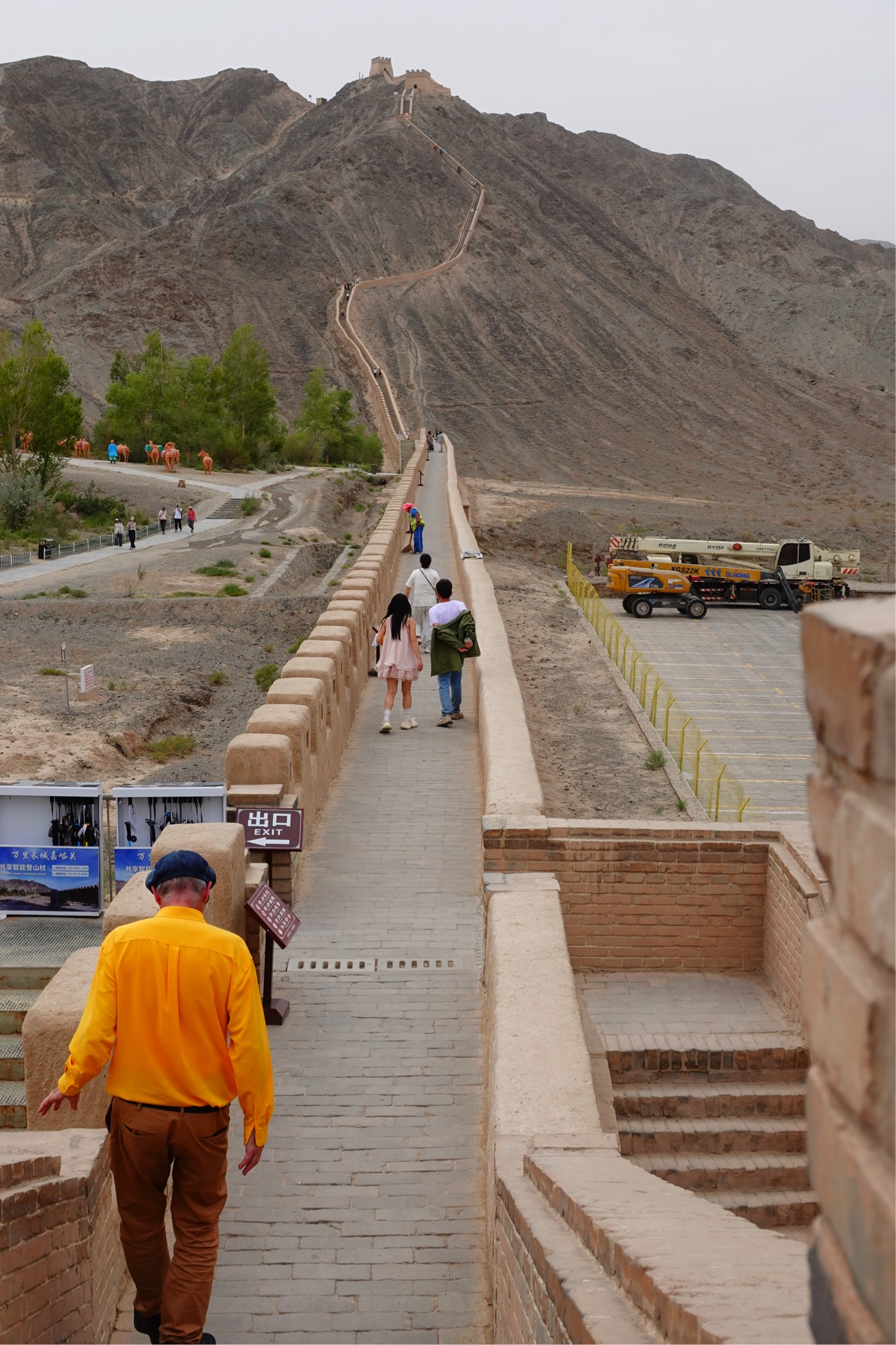
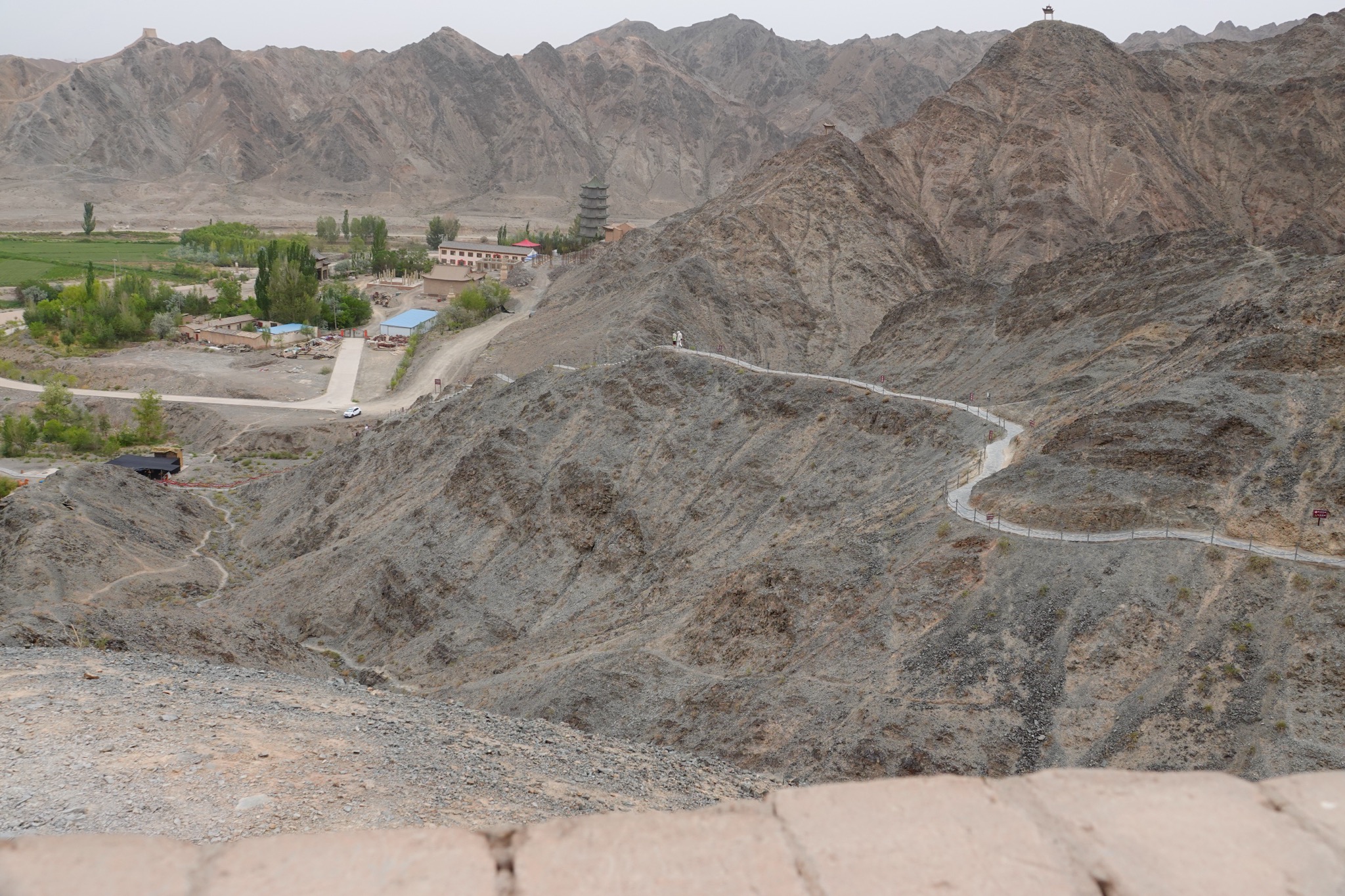
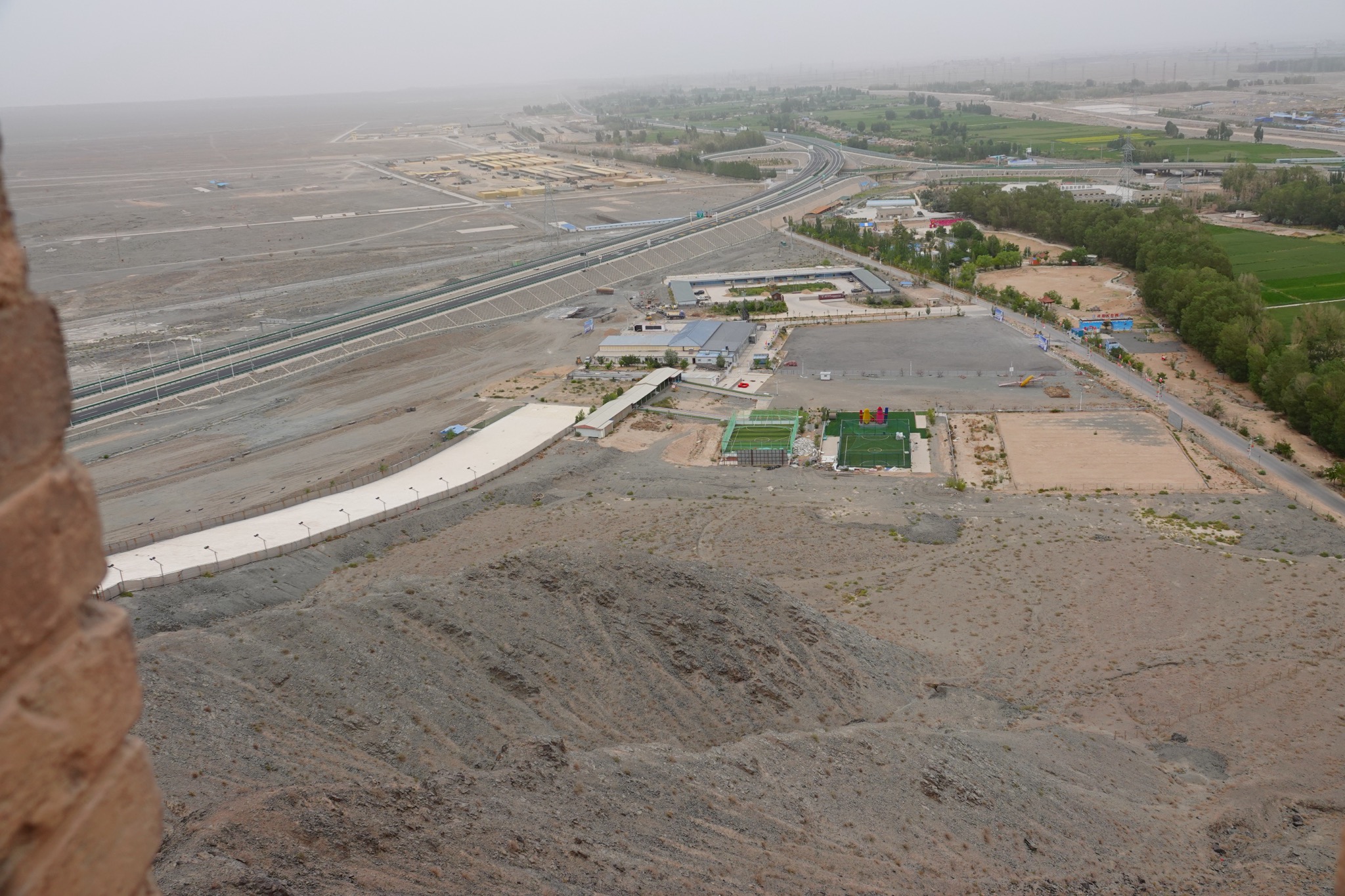
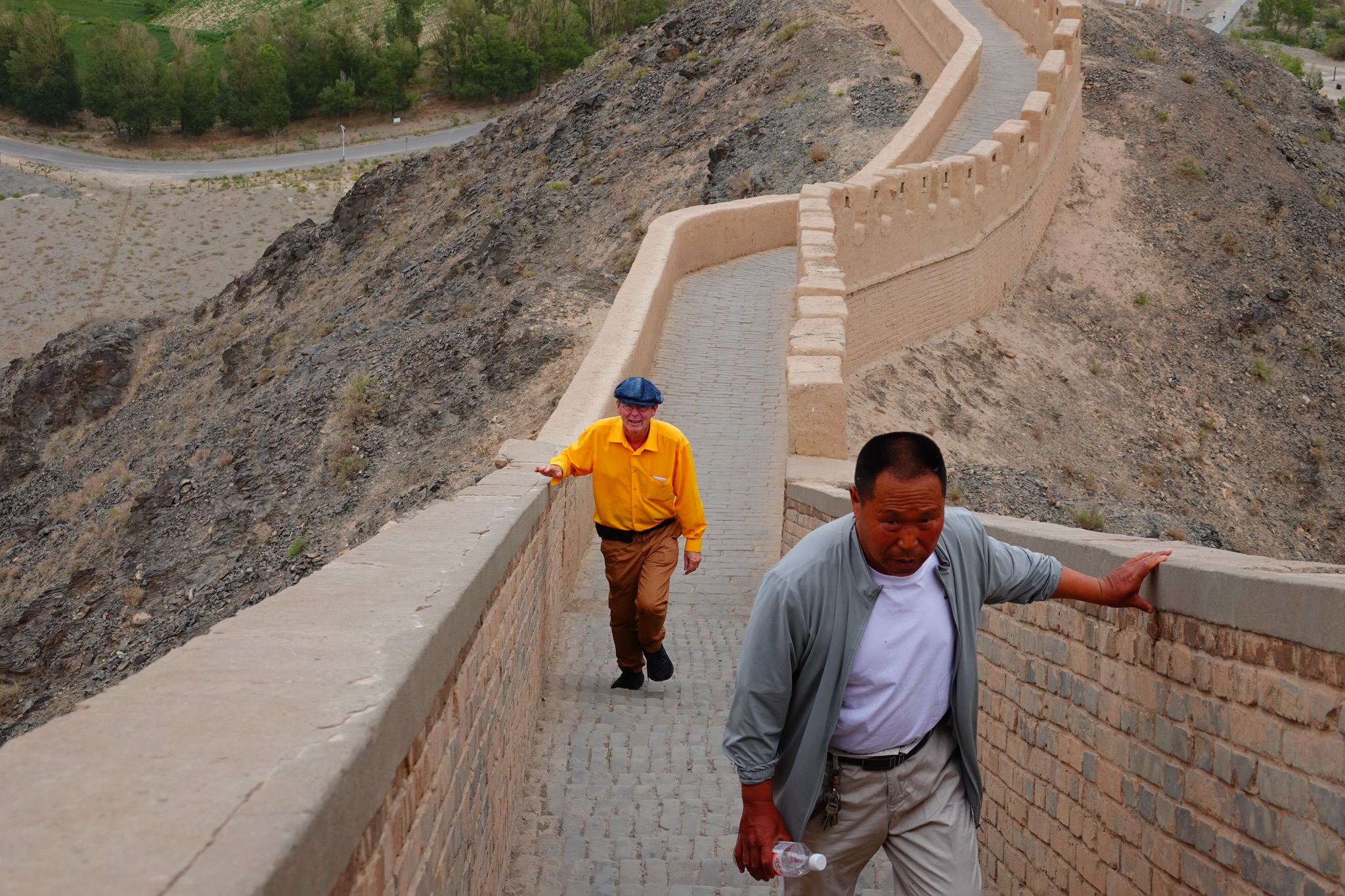
Then it was on to the Jiyaguan fort which would compare with any European castle for strength and finally a steep climb up a section of the wall. I did the climb but it was silly. Made my tendonities already very sore worse.
Dinner was almost European style at the local shopping centre a prawn salad, some fried battered pork and a couple of kebabs. Afterwards we had a great crème caramel from the local “French” bakery. I gave in and bought some sneakers to wear instead of my beloved slip ons but not sure it makes any difference. Newsest and most expensive in the shop. At about $100 still 1/3 the price of similar Hokas in Australia.
Long days plenty of walking and not much time for washing.
Wei Jin tombs Claude summary
The Wei-Jin Tombs (魏晋墓) lie out in the Gobi about 20 km northeast of Jiayuguan, near Xincheng. They’re a vast cemetery of brick tombs dating from the Cao Wei and Western Jin periods, roughly the 3rd to early 4th century CE. Surveys have located well over a thousand tombs scattered across the desert, though only a handful have been excavated and opened.
What makes them famous is the painting. Each tomb is built of small bricks, and many bricks carry a single self-contained picture — one scene per brick — so a chamber becomes a gallery of hundreds of individual images. This has earned the site the nickname “the world’s largest underground art gallery.” The brushwork is quick, loose and confident, often just a few ochre and black strokes, and the subjects are almost entirely secular scenes of everyday frontier life: ploughing and harvesting, herding, hunting, silk reeling and mulberry picking, cooking and feasting, music, and garrison and travel scenes.
The single most celebrated brick is the “Postman” (驿使图) from Tomb 5: a courier galloping with mail held aloft, no mouth painted on his face — read by some as a symbol of confidentiality. It’s regarded as one of the earliest pictorial records of an organised postal relay in China, and in 1982 it was adopted as the emblem of China’s modern postal service and issued on a stamp, which is how most Chinese people first encounter the image.
The importance is partly documentary and partly art-historical. The Wei-Jin period in central China was fractured and war-torn, but the Hexi Corridor stayed relatively stable and prosperous, becoming a refuge and a working agricultural and trading society. Written records for this frontier are thin, so the murals are an unusually rich primary source on its economy, technology, multi-ethnic Han-and-nomad population, and daily customs along the Silk Road. In art history they sit as a bridge between the formal narrative art of Han dynasty tombs and the more developed figure painting of later dynasties, and they are among the rare bodies of painting to survive from this era at all.
Jiayuguan fort history and significance via Claude
Jiayuguan Fort (嘉峪关) sits at the western end of the Hexi Corridor in Gansu, guarding the narrowest pinch point between the snow-capped Qilian Mountains to the south and the Black Mountains to the north. It’s the westernmost major pass of the Ming Great Wall, and earned the title “the Greatest Pass Under Heaven” (天下第一雄关).
Construction began in 1372 under the Hongwu Emperor, early in the Ming dynasty, supervised by General Feng Sheng, and the complex was elaborated over roughly the next 168 years into the layered fortress that survives today. The design is a textbook of Ming military engineering: an inner city of rammed earth and brick (walls around 11 metres high), an outer enclosure, and a moat, with two great gate-towers — Guanghua (“Bright Renewal”) on the east and Rouyuan (“Conciliation of the Distant”) on the west. The Rouyuan gate faced the Western Regions, and its name captures the fort’s whole purpose: this was where the Chinese state ended and the territory of nomads, deserts and foreign kingdoms began. Nearby sit two related Ming structures — the “Overhanging Great Wall” climbing the Black Mountain, and the First Beacon Tower of the Great Wall above the Taolai River gorge, which marks the wall’s western terminus.
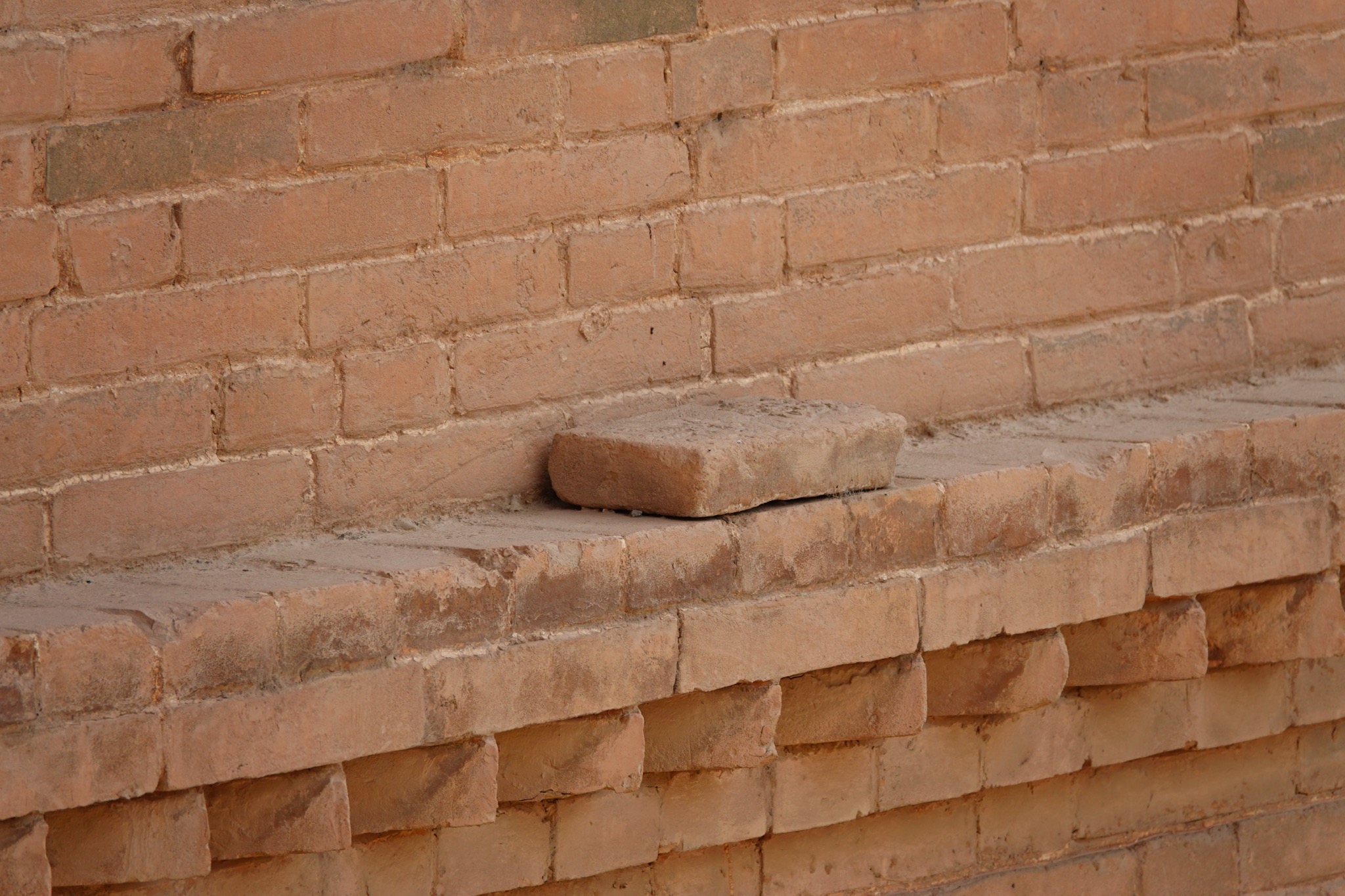
Its cultural weight comes from this threshold status. For centuries Jiayuguan was the symbolic edge of Chinese civilisation. Soldiers garrisoned it, merchant caravans passed through it carrying the Silk Road trade, and disgraced officials were exiled “beyond the pass” (出关) — a phrase heavy with the dread of leaving the known world for the wilderness. There’s a famous legend of the mason Yi Kaizhan, who calculated so precisely that only a single surplus brick remained; it was set on a ledge of a gate tower and, the story goes, still rests there as a quiet monument to craftsmanship. Today the fort is inscribed (with the rest of the Great Wall) on the UNESCO World Heritage list and is one of the best-preserved Ming passes anywhere.
Worth noting for the Silk Road context: the fort is Ming, so it postdates the Tang dynasty by several centuries — during the Tang the Hexi Corridor was vital but this particular fortress didn’t yet exist. The location, though, has been a strategic chokepoint for as long as the corridor has carried trade. It sits between Zhangye and Dunhuang, so if your route runs the full Hexi Corridor it falls naturally on the way, and it makes a striking contrast to the Buddhist softness of Dunhuang — one is grottoes and devotion, the other is rammed earth and frontier hardness.