Jiayuguan
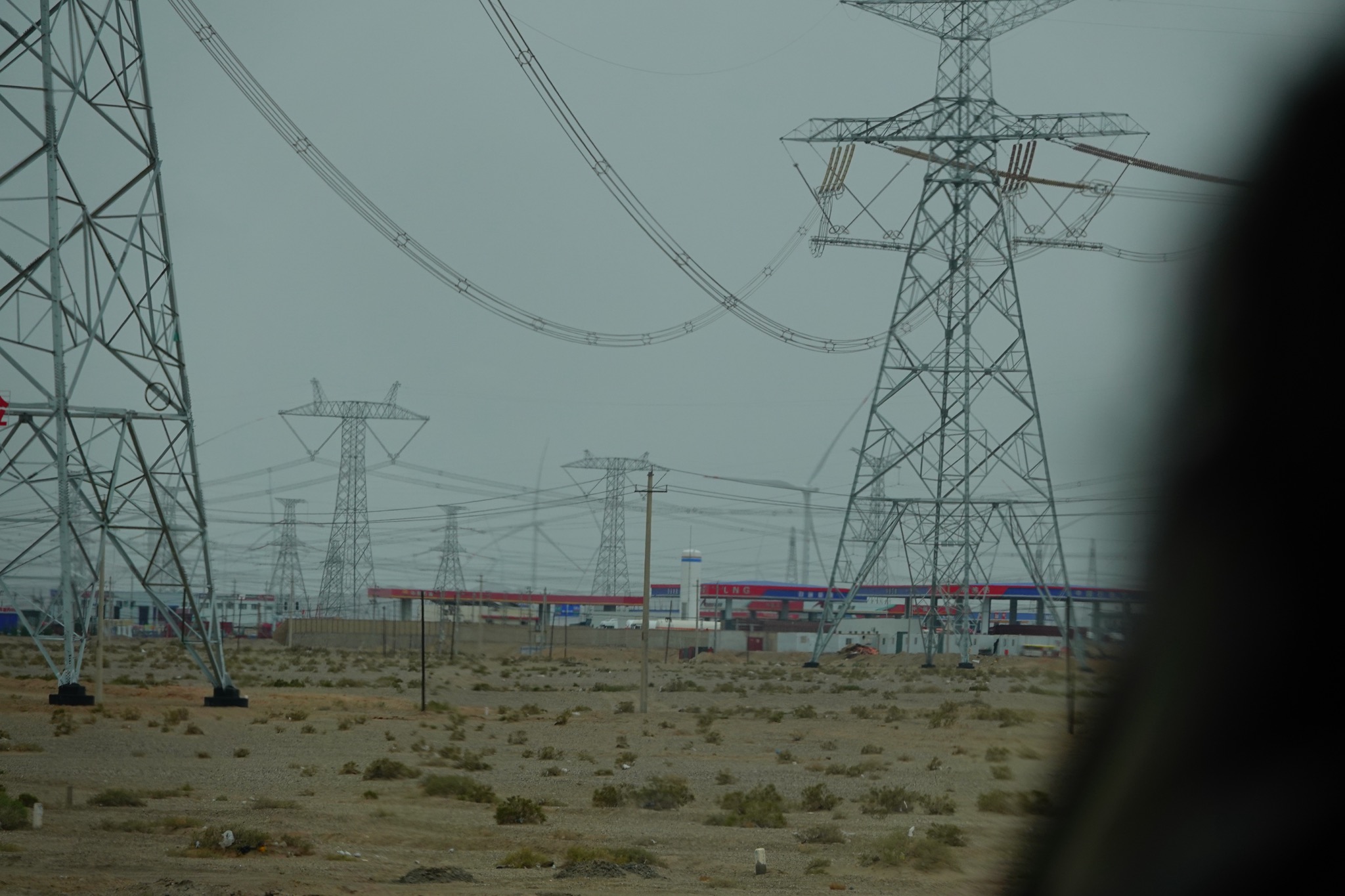
Today started with rain and a grey sky as we headed 400 km North West through the Gobi desert en route to Dunhunag
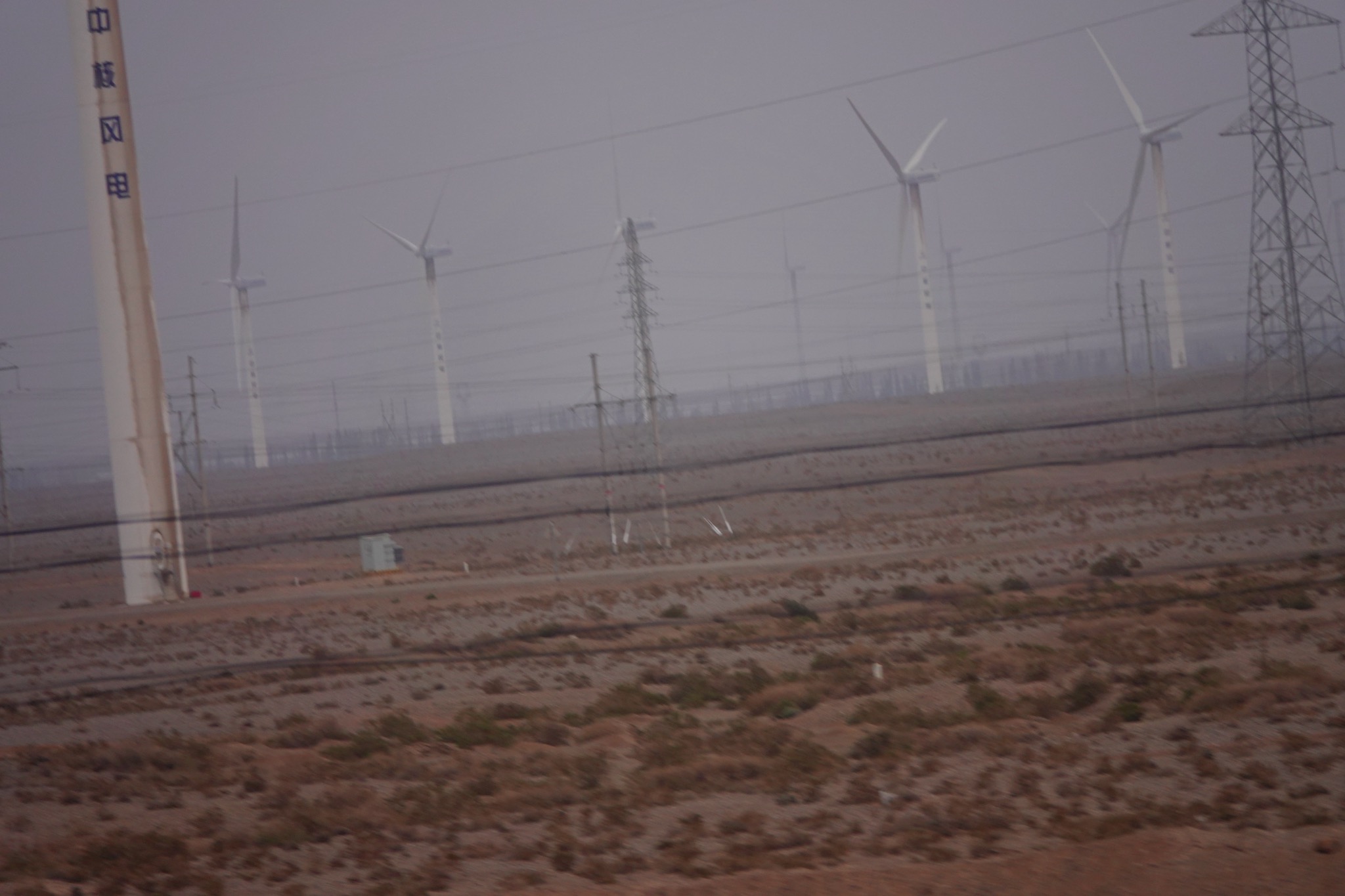
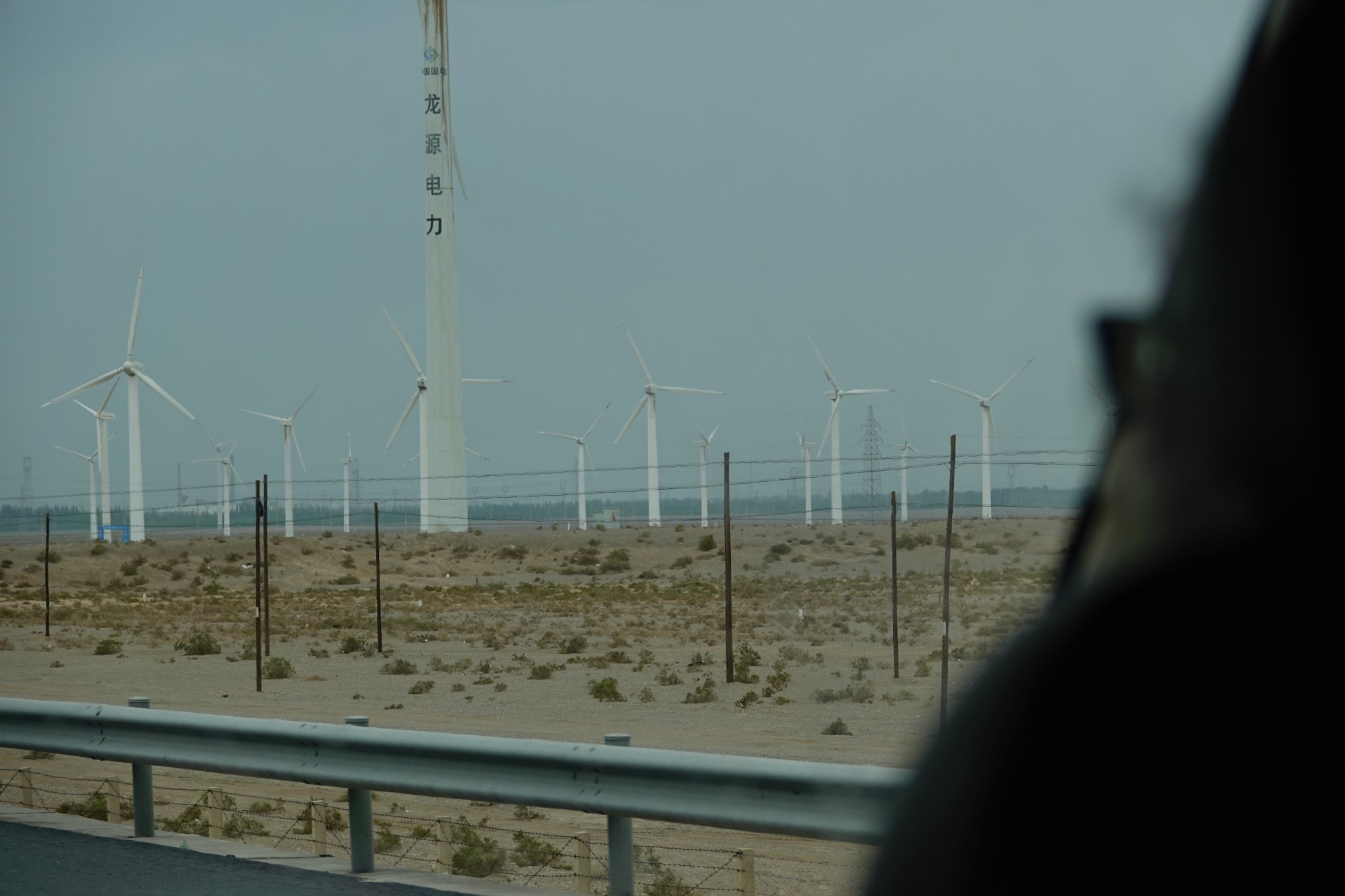
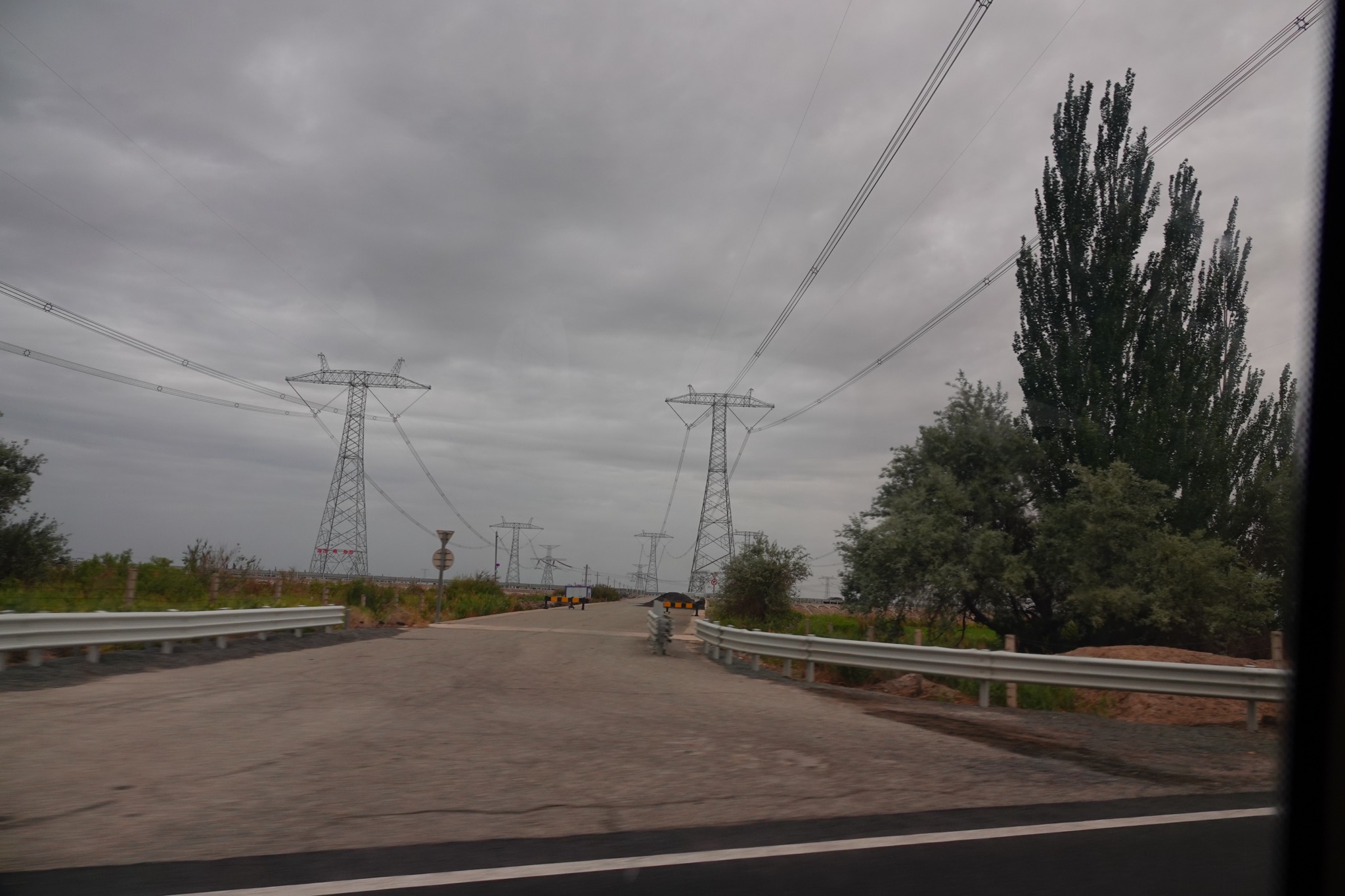
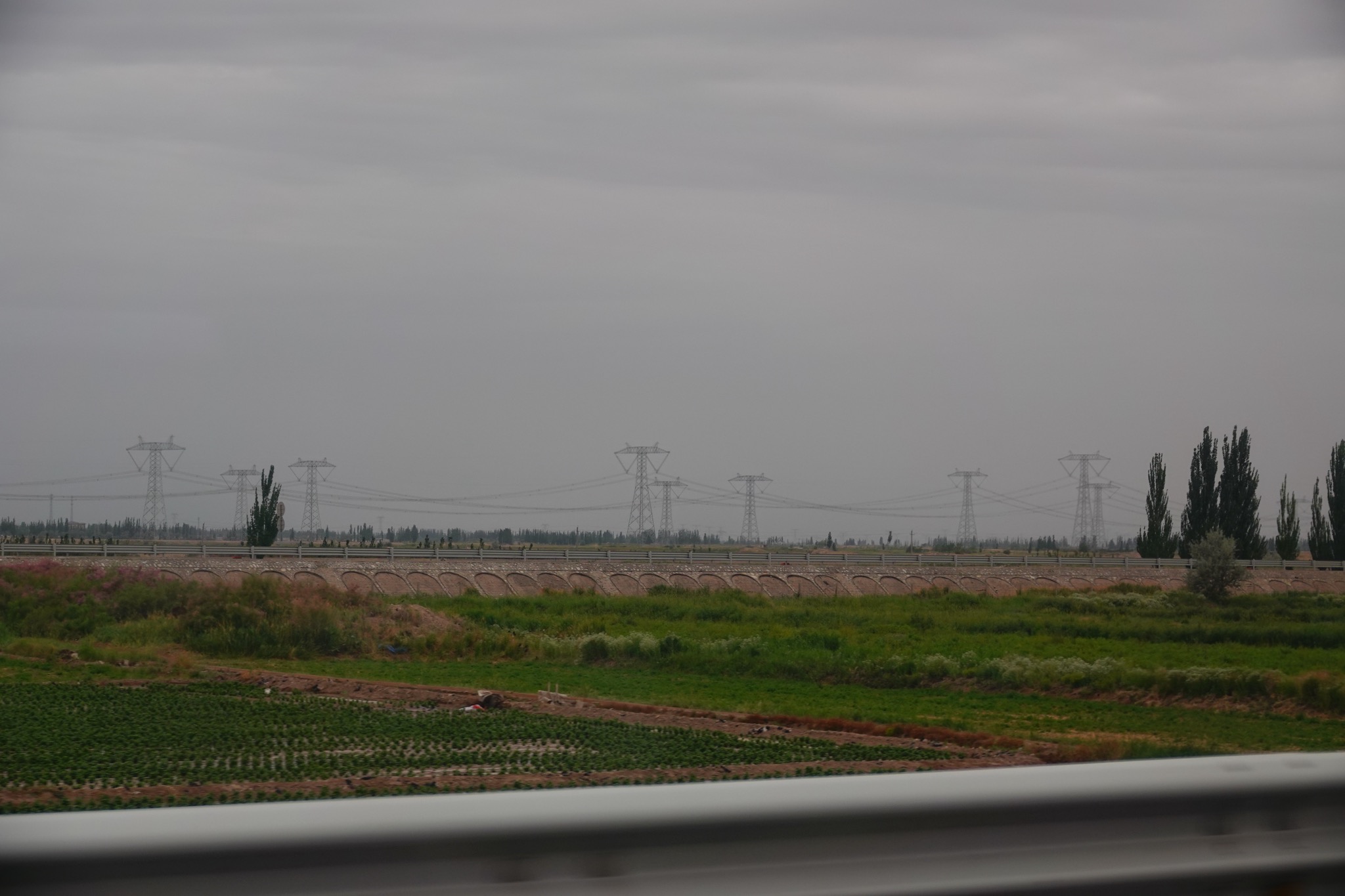
For me the interest was in massive wind farms 2000-3000 turbines in row after row km after km. And endless transmission lines. Not scenic.
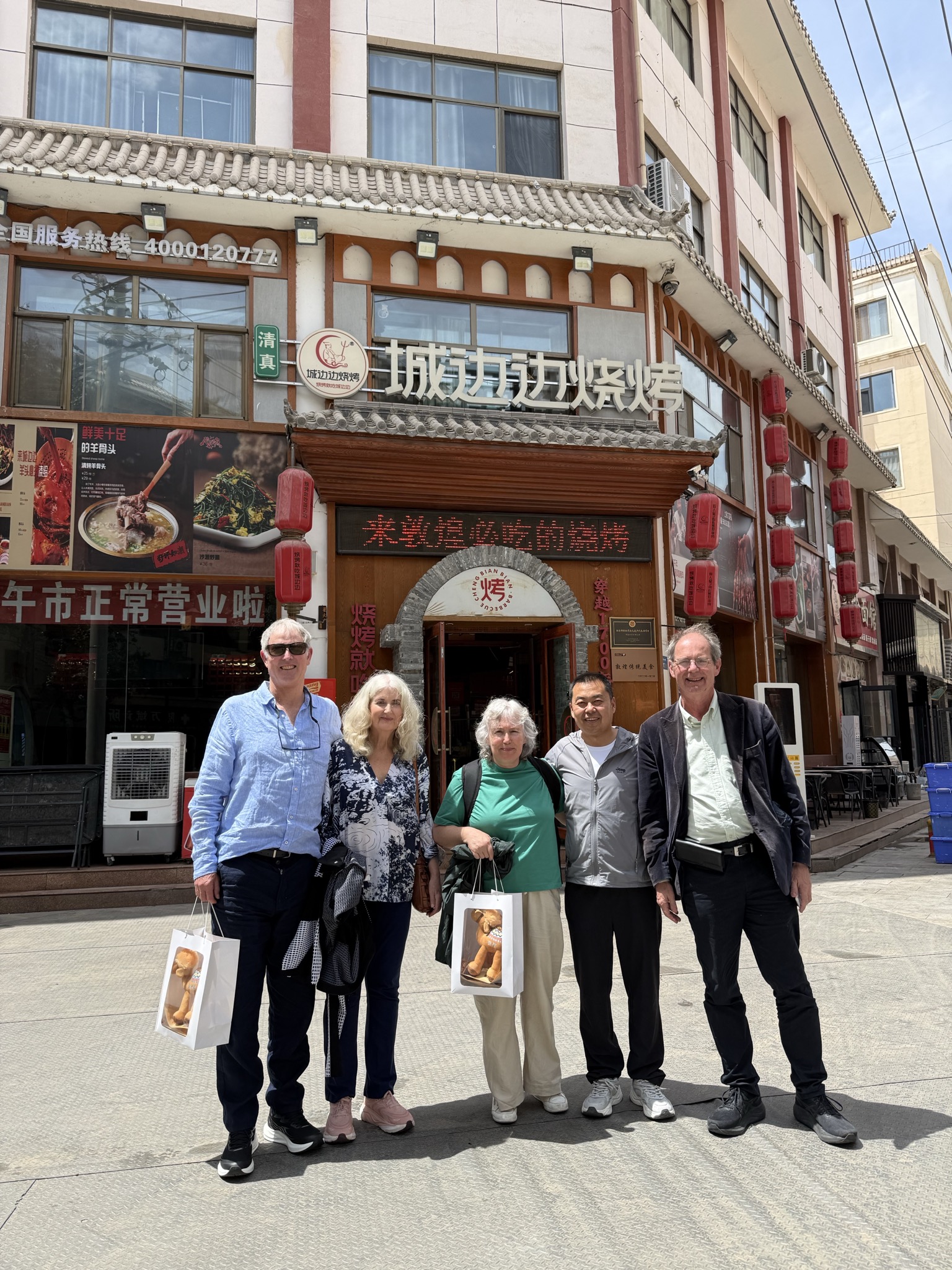
On arrival we were met by our tour organisers Simon Lei and had a great lunch including a bottle of smooth and good quality Chinese red wine.
After tourism Dunhuang does agriculture including lamb and, unbelievably in the desert, cotton.
We complimented Simon on his first class tour, excellent hotels and good guides. He mentioned that the national statistics don’t lie and business is a bit soft.
We had a goid quality local dinner and now the washing is drying.
Some of the early photos were underexposed I stuffed up a camera setting.
Sand dunes
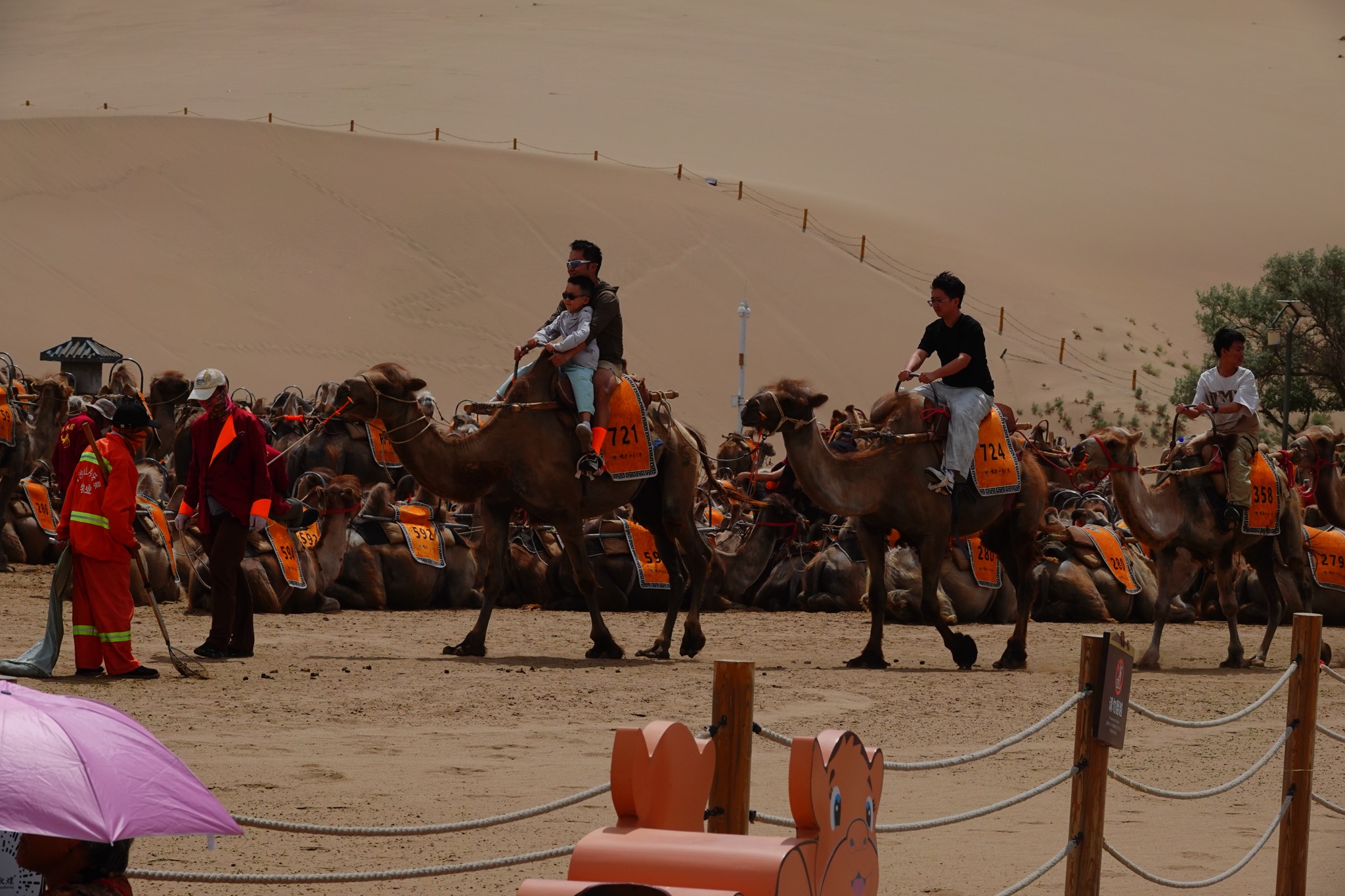
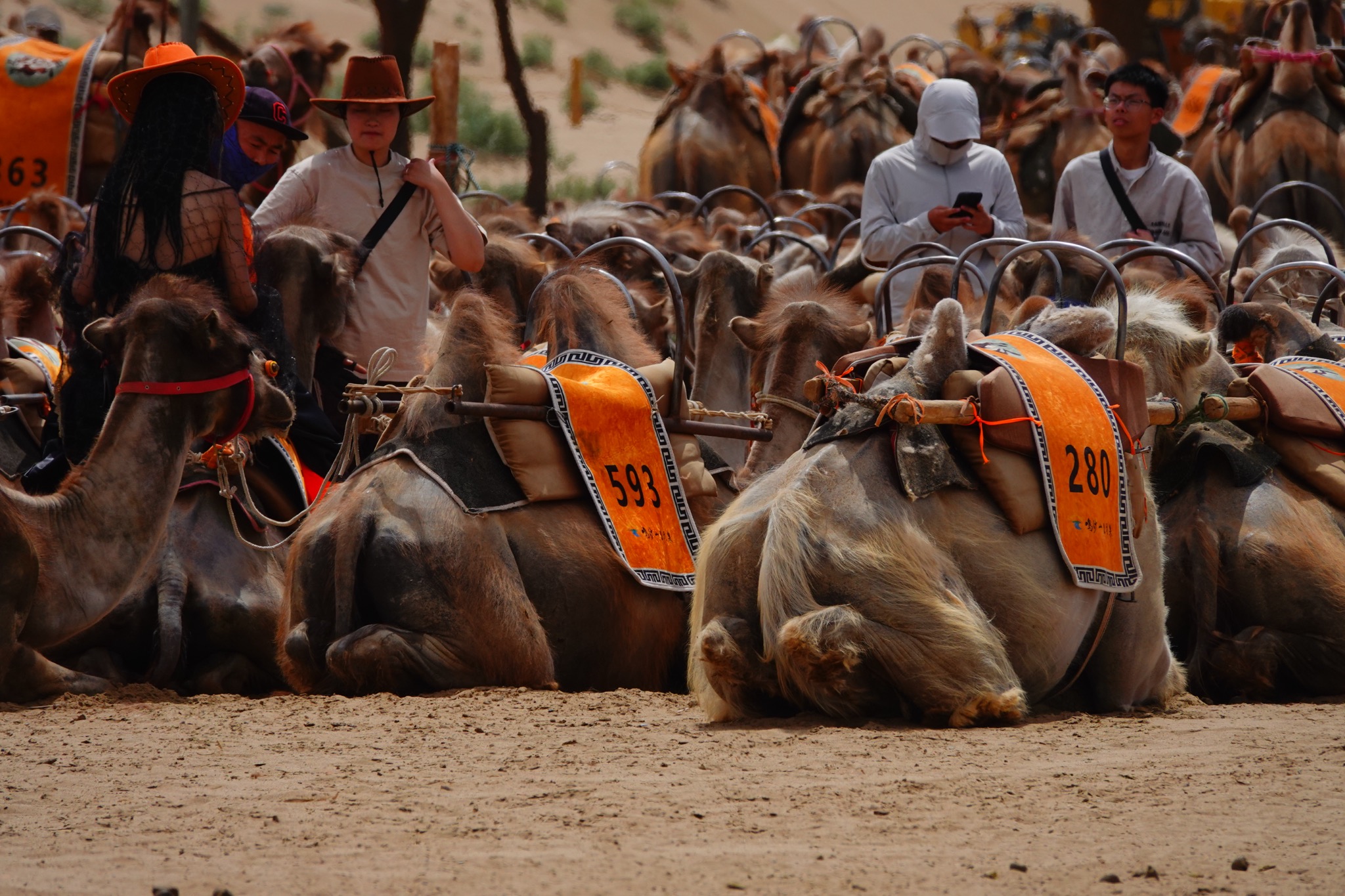
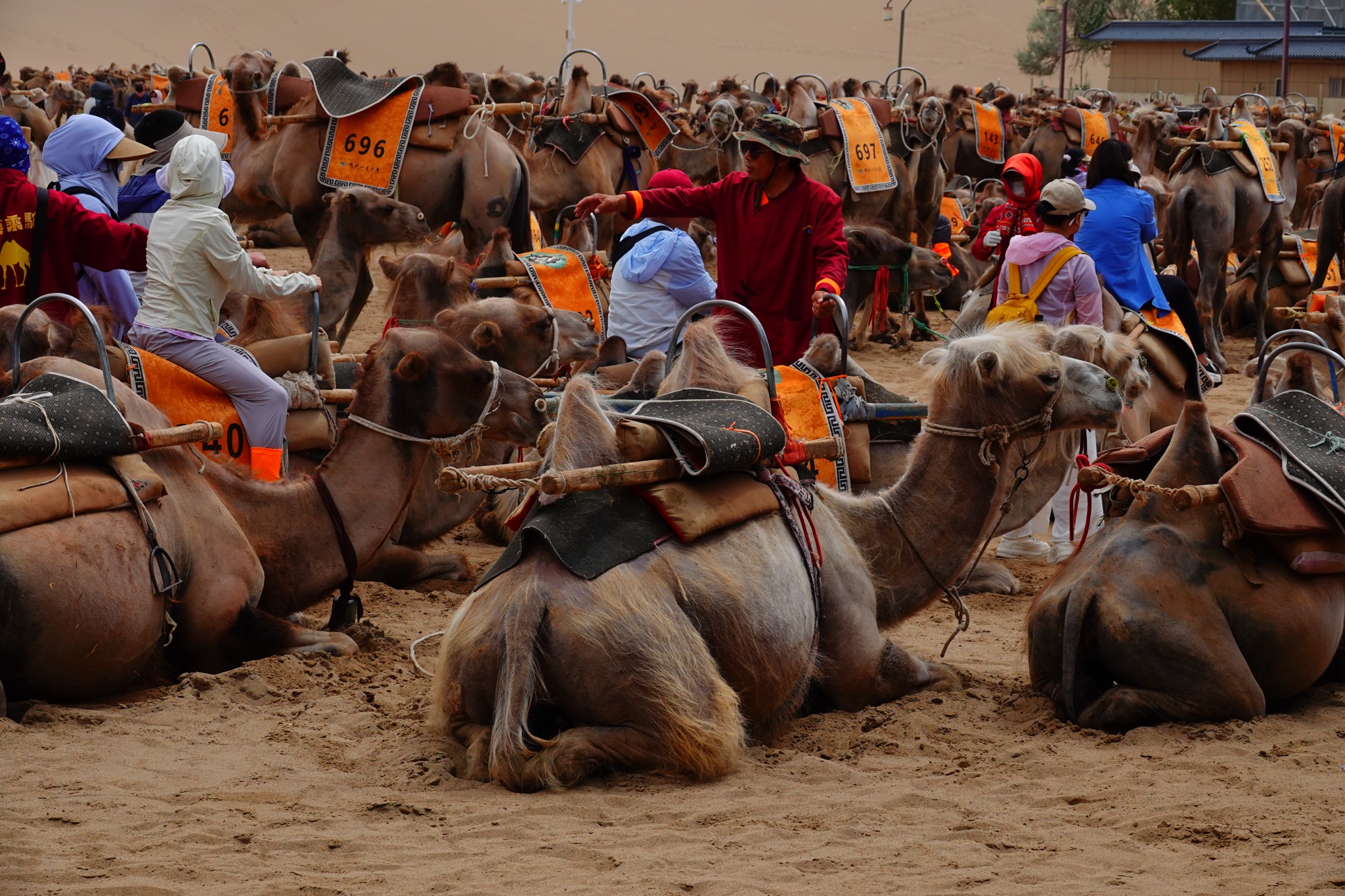
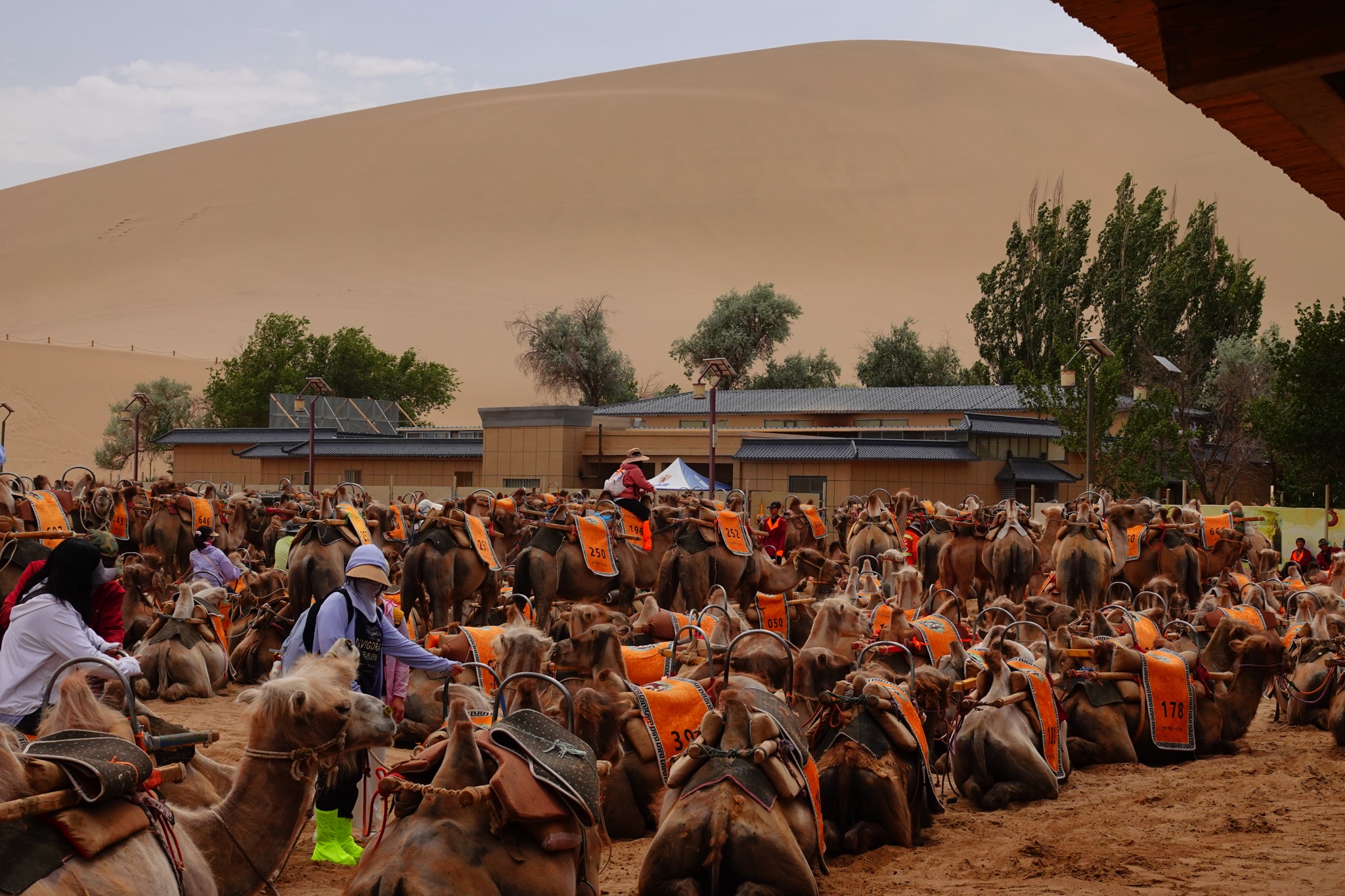
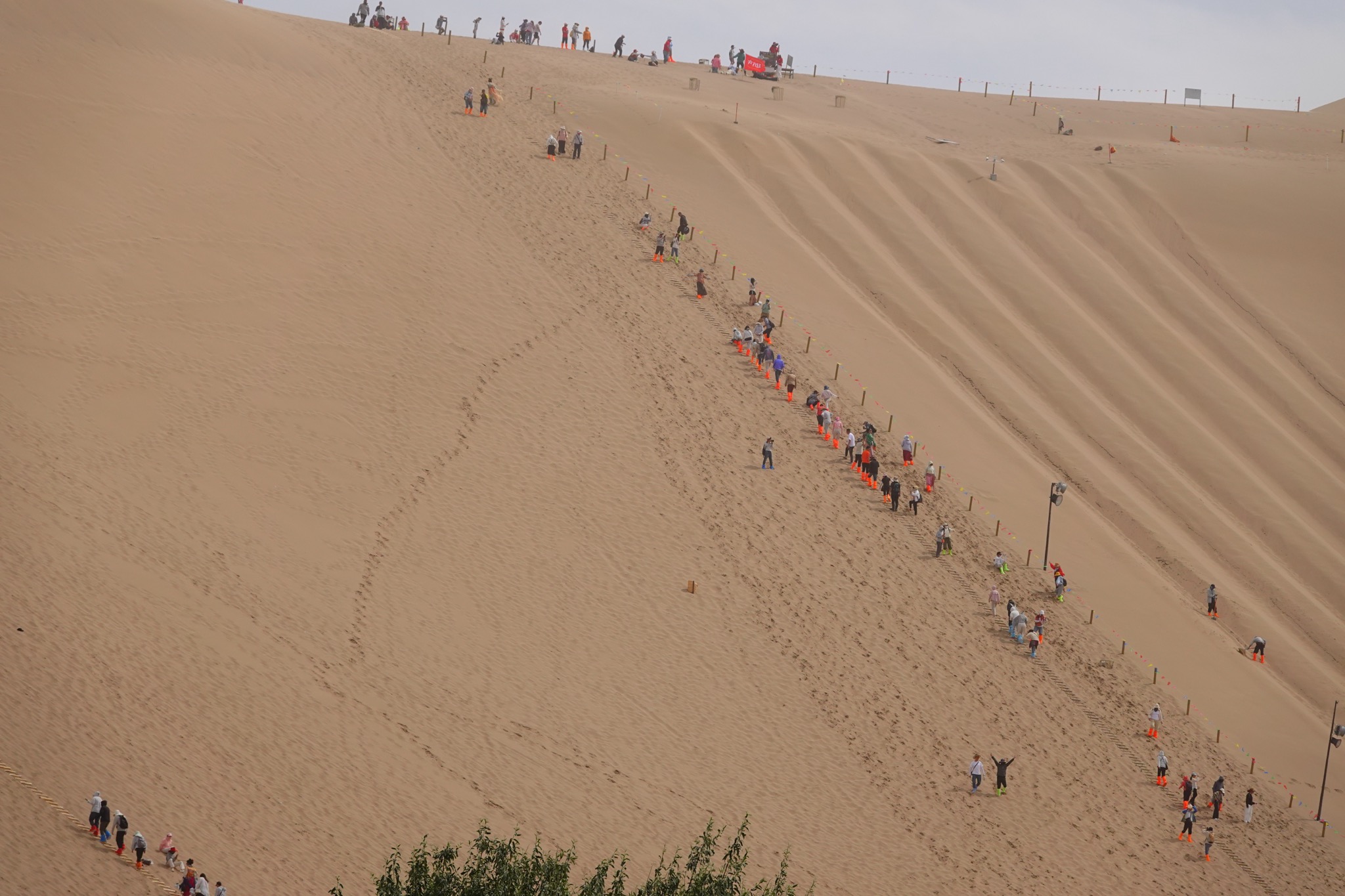
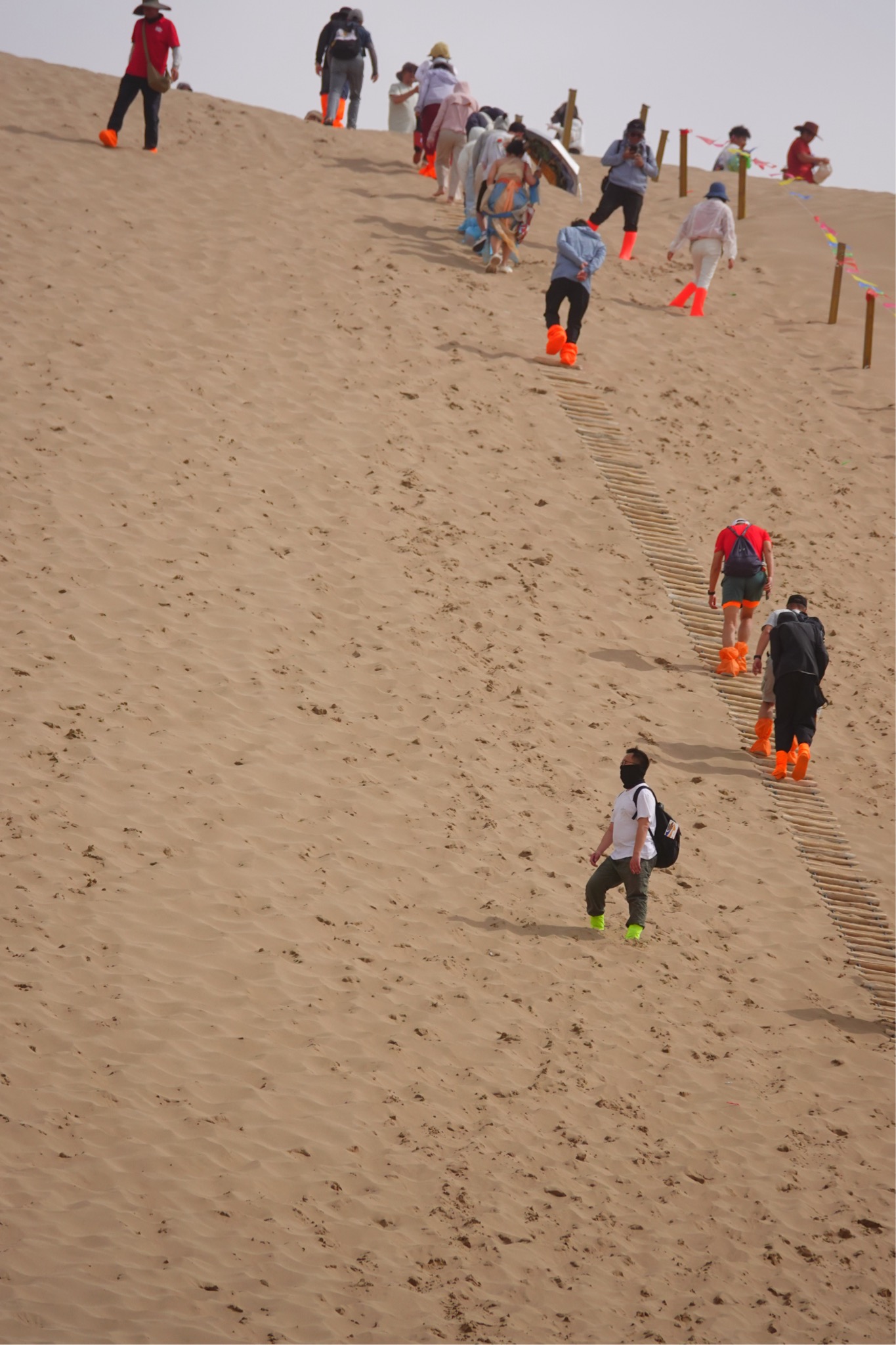
Mingsha Shan and Crescent Lake (Yueyaquan) — singing-sand dunes south of the town, with a small spring-fed lake that has miraculously survived the desert. Touristy (camel rides, sand sledding) but the dunes themselves are spectacular at dawn or sunset, and the lake-and-pavilion composition is the iconic Dunhuang image.
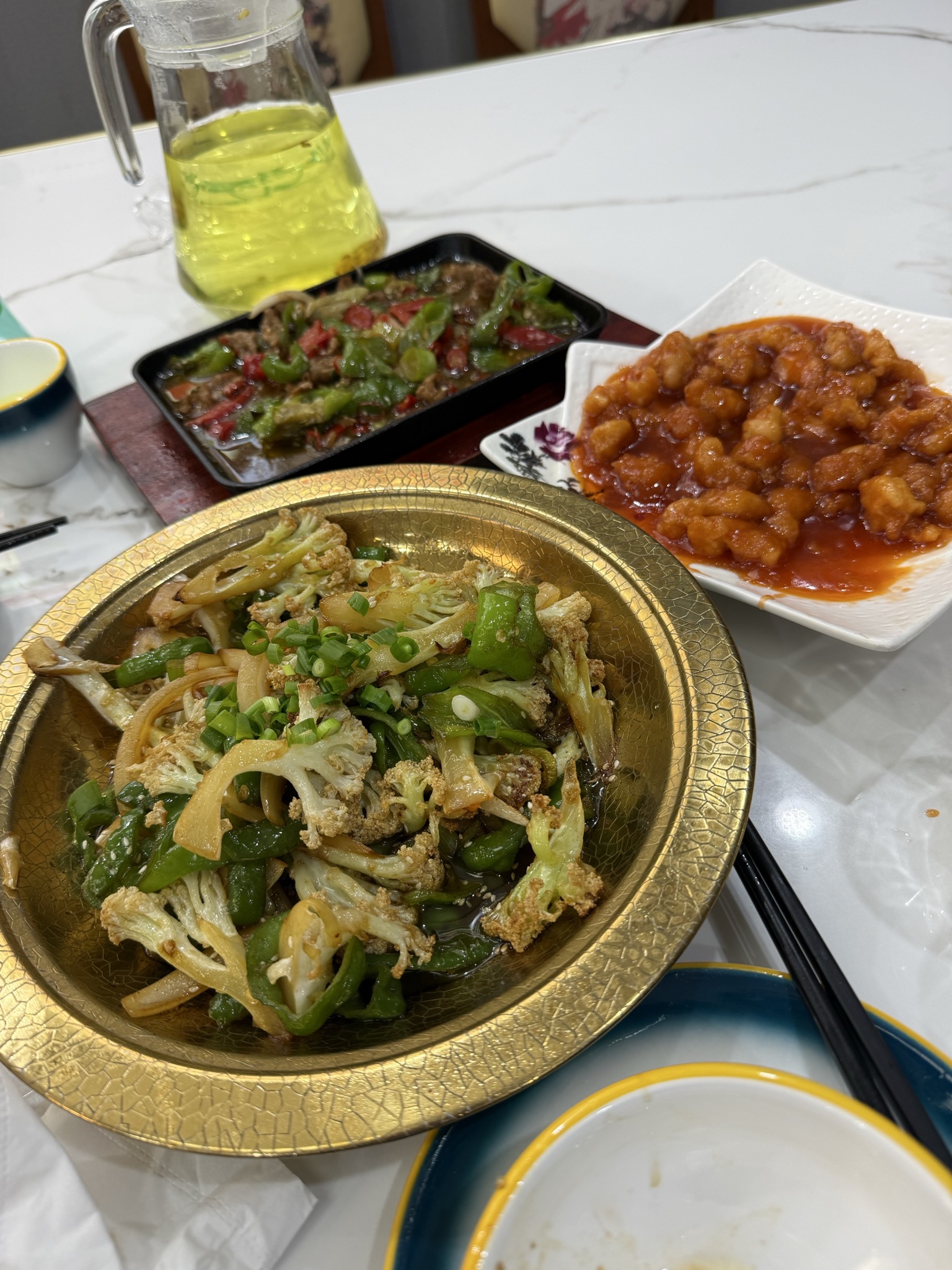
Tasty fried and steamed cauliflower via Claude
The dish you’re describing is almost certainly 干锅花菜 (gān guō huā cài), “dry-pot cauliflower.” It’s a Sichuan-origin dish that’s now eaten all over China, including throughout the northwest, and the method is exactly fry-then-steam: the florets are blistered in hot oil first, then briefly covered with a splash of liquid so they steam tender and soak up the sauce. It’s especially good in Gansu because the local loose-headed cauliflower — longer stems, looser florets — cooks quicker and captures the spicy-savory flavors of the dish better  than the dense Western type.
Here’s a working recipe:
The two things that make or break it: get the florets small and properly dry before they hit the oil so they blister rather than stew, and don’t skip the doubanjiang — that fermented chilli-bean paste is what gives the dish its depth. If you want to nudge it toward the local Hexi Corridor palate rather than straight Sichuan, go easy on the Sichuan peppercorns and add a pinch of toasted cumin with the aromatics, which echoes the lamb-and-cumin flavours you’ll be tasting everywhere out there.
Dry-Pot Cauliflower (干锅花菜)
Northwest-China style fried-then-steamed cauliflower with pork belly, dried chilli and chilli bean paste. Blistered florets, savoury and lightly numbing.
Ingredients
- 18 oz cauliflower (ideally loose-headed Chinese type), broken into small florets
- 4 1/4 oz pork belly, thinly sliced
- 6 dried red chillies, halved, seeds shaken out
- 4 garlic cloves, sliced
- 1/2 oz ginger, thinly sliced
- 2 spring onions, cut into 3cm segments (white and green kept separate)
- 1 tbsp Pixian chilli bean paste (doubanjiang)
- 1 tbsp light soy sauce
- 1 tsp dark soy sauce
- 1 tbsp Shaoxing wine
- 1 tsp sugar
- 1 tsp Sichuan peppercorns (optional)
- 2 tbsp cooking oil
- 1/4 tsp salt
- 1/4 cup water or light stock
Steps
- Break the 18 oz cauliflower (ideally loose-headed Chinese type), broken into small florets into small bite-sized florets and dry them well — wet florets won’t blister. Slice the 4 1/4 oz pork belly, thinly sliced, 4 garlic cloves, sliced and 1/2 oz ginger, thinly sliced, and separate the white and green parts of the 2 spring onions, cut into 3cm segments (white and green kept separate).
- Heat a wok over high heat, add 1 tbsp of the 2 tbsp cooking oil, and add the 18 oz cauliflower (ideally loose-headed Chinese type), broken into small florets in a single layer. Fry, tossing only occasionally, until the edges char and blister and the florets are about half-cooked. Remove and set aside.
- Add the remaining 2 tbsp cooking oil and the 4 1/4 oz pork belly, thinly sliced. Fry until the slices are golden and have rendered their fat and curled at the edges.
- Turn heat to medium. Add the 6 dried red chillies, halved, seeds shaken out, 1 tsp Sichuan peppercorns (optional), garlic, ginger and the white parts of the 2 spring onions, cut into 3cm segments (white and green kept separate). Stir until fragrant, about 30 seconds, then add the 1 tbsp Pixian chilli bean paste (doubanjiang) and fry another 30 seconds until the oil turns red.
- Return the 18 oz cauliflower (ideally loose-headed Chinese type), broken into small florets to the wok. Add the 1 tbsp light soy sauce, 1 tsp dark soy sauce, 1 tbsp Shaoxing wine, 1 tsp sugar and 1/4 tsp salt, toss to coat, then pour in the 1/4 cup water or light stock. Cover and let steam until the cauliflower is just tender.
- Uncover, raise the heat and stir until the liquid has cooked off and the florets are glossy. Toss through the green parts of the 2 spring onions, cut into 3cm segments (white and green kept separate) and serve hot with steamed rice.
Notes
Keep florets small or they won’t cook through in time. For a vegetarian version, skip the pork and start by frying the aromatics in a little extra oil — a few dried shiitake or some cumin works well for a more distinctly northwestern flavour. If you like it drier and chewier (the true “dry-pot” texture), skip the water in step 5 and just keep tossing on lower heat until tender.